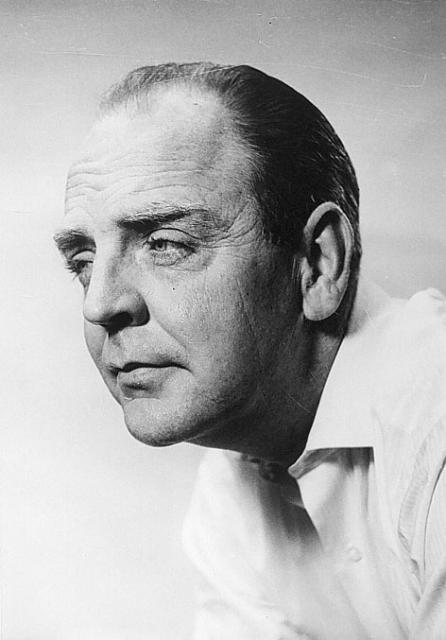
William Motter Inge
 USA
USA- Biography of William Inge
- Early Career
- Transition to Playwriting
- Success and Awards
- Later Career and Personal Struggles
- Legacy
Biography of William Inge
Early Life and EducationWilliam Inge was an American writer and playwright born in Independence, Kansas. He attended the local college in Independence and graduated with a bachelor's degree from the University of Kansas in 1935. Inge specialized in communications and dramatic arts. He received a scholarship to pursue further education and briefly attended George Peabody College for Teachers in Nashville, Tennessee, but did not complete his master's degree.
Early Career
After college, Inge worked as a laborer on a local highway in Kansas while also working as a news announcer. From 1937 to 1938, he taught English and dramatic arts in a Kansas school. In 1938, he returned to George Peabody College and completed his master's degree. From 1938 to 1942, Inge taught at Stephens College in Columbia, Missouri.
Transition to Playwriting
In 1943, Tennessee Williams encouraged Inge to pursue playwriting. He completed his first play, "Farther Off from Heaven," in 1947. His next work, "Come Back, Little Sheba," had a successful run on Broadway with 190 performances. Shirley Booth and Sidney Blackmer received Tony Awards for their roles in the play. The play was adapted into a film in 1952, earning Shirley Booth an Oscar and a Golden Globe.
Success and Awards
In 1953, Inge received the Pulitzer Prize for Drama for his play "Picnic." From February 19, 1953, to April 10, 1954, "Picnic" had a highly successful run on Broadway. Inge's subsequent plays, "Bus Stop" and "The Dark at the Top of the Stairs," were also well-received.
Later Career and Personal Struggles
Not all of Inge's plays were as successful, such as "Natural Affection" in 1962, which had a short run due to the New York newspaper strike. Inge experienced a period of depression and believed he would no longer be able to create meaningful work. Tragically, he died by carbon monoxide poisoning on June 10, 1973, at the age of 60.
Legacy
Despite his personal struggles, Inge's works continued to be popular after his death. American theaters continued to stage his previously unknown plays, and in 2009, around two dozen of Inge's previously unproduced plays were performed in theaters.



