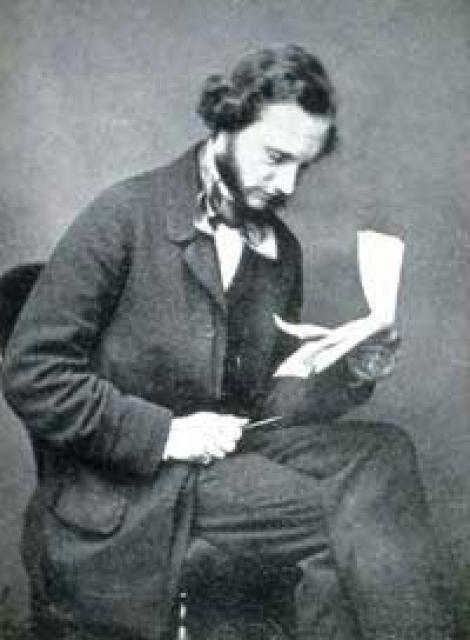
William Thomson
 Great Britain
- Early Life and Education
- Parisian Training and Glasgow Appointment
- Contributions to Thermodynamics
- Electromagnetism and Electrical Engineering
- Navigation and Oceanography
- Honors and Legacy
Early Life and Education
William Thomson, later known as Lord Kelvin, was born in Belfast, Ireland, on June 26, 1824. He displayed a prodigious aptitude for mathematics and physics from an early age. After graduating from the University of Glasgow, he continued his studies at the University of Cambridge, where he excelled in mathematics.
Parisian Training and Glasgow Appointment
In 1845, Thomson traveled to Paris to intern in the laboratory of renowned physicist Antoine-César Becquerel. During this time, he developed a method for solving electrostatics problems using "mirror images" (1846). Upon returning to Glasgow, Thomson was appointed Professor of Natural Philosophy in 1846 and remained in this position for 53 years.
Contributions to Thermodynamics
Thomson's contributions to thermodynamics were significant. He introduced the concept of an absolute thermodynamic scale (1848) and independently formulated the second law of thermodynamics (1851). Moreover, he coined the term "dissipation of energy" and developed the theory of electromagnetic oscillations.
Electromagnetism and Electrical Engineering
Thomson also made notable advances in electromagnetism and electrical engineering. He discovered the third thermodynamic effect, now known as the Thomson effect (1856). His research on transatlantic cables led to the development of practical applications, including the mirror galvanometer and the use of multi-strand copper wires.
Navigation and Oceanography
Beyond physics, Thomson's interests extended to navigation and oceanography. He designed an improved marine compass (1858), invented the echo sounder (1874), and developed the tide gauge (1876). His investigations into wave propagation and vortex motion further enriched the field.
Honors and Legacy
In 1892, Thomson was elevated to the peerage as Baron Kelvin. He received numerous honors and accolades, including being elected as a foreign member of the St. Petersburg Academy of Sciences (1896). Kelvin's legacy as a pioneering physicist and engineer continues to inspire generations of researchers and innovators.


