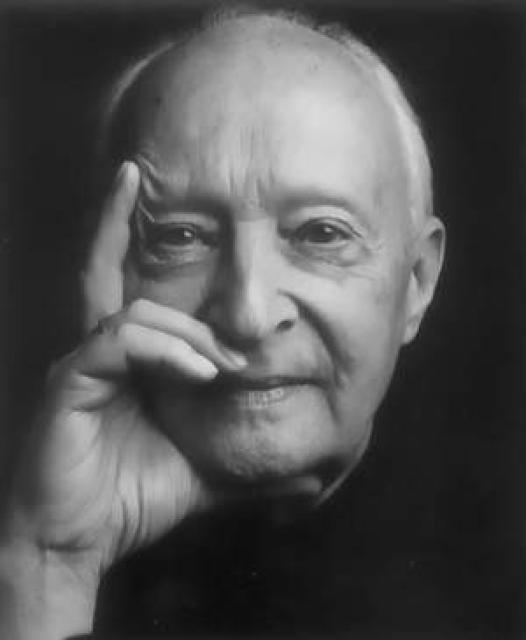
Witold Lutoslawski
 Poland
Biography of Witold Lutosławski
IntroductionWitold Lutosławski was a Polish composer and conductor, widely regarded as one of the greatest musicians of the 20th century. He was born into a family of landowners and was the son of political activist Józef Lutosławski (1881-1918), who was arrested and killed by the Bolsheviks in a Moscow prison. Lutosławski showed musical talent from a young age, composing his first piece, "Prelude for Piano," at the age of nine. He also studied violin and piano.
Educational Background
Lutosławski completed his education at the Warsaw Conservatory in 1937. During his time there, he studied under the renowned Russian and Polish composer and professor, Witold Osiński Maliszewski (1873-1939), who was a student of N. A. Rimsky-Korsakov and the founder of the Odessa Conservatory. Maliszewski played a crucial role in shaping Lutosławski's compositional skills. Lutosławski also drew inspiration from other prominent composers of the 20th century, such as Igor Stravinsky and Karol Szymanowski. He had a particular interest in Mazovian folklore.
World War II and Beyond
During World War II, Lutosławski was mobilized and eventually captured, but managed to escape on his way to a concentration camp. In Warsaw, he worked in cafes alongside Andrzej Panufnik, raising funds for artists who were hiding from the Nazis, including Władysław Szpilman. In 1948, Lutosławski faced accusations of formalism from the Stalinist authorities following the Zhdanov Doctrine. In the 1950s, he embraced serial techniques, which also drew criticism from the authorities. However, international recognition came to Lutosławski after he received the UNESCO Prize in 1959 and his String Quartet was performed in Stockholm in 1965.
Accomplishments
Lutosławski composed four symphonies, a concerto for orchestra, and a range of chamber and vocal works, often set to the poetry of A. Mišo, R. Desnos, K. Illakowicz, J. Tuwim, and other poets. He was the recipient of numerous prestigious awards, including the Sonning Prize and the Grawemeyer Award in 1967, the Ernst von Siemens Music Prize in 1983, the Graeme Murray Award in 1985, and the Kyoto Prize in 1993. He was awarded the Gold Medal of the Royal Philharmonic Society of Great Britain in 1987 and was made a Knight in the French Order of Literature and Art. Lutosławski was also honored with the Polish Order of the White Eagle in 1994 and received honorary doctorates from several universities, including Cambridge.
Legacy
Lutosławski's compositions have been performed by some of the world's finest musicians, including Mstislav Rostropovich, Heinz Holliger, Dietrich Fischer-Dieskau, Anne-Sophie Mutter, Don Appert, Georg Solti, Esa-Pekka Salonen, and Antoni Wit, among many others. The composer and his wife are buried in the Powązki Cemetery in Warsaw. Several pieces have been dedicated to Lutosławski, such as Magnus Lindberg's "Aura" in 1994, Toru Takemitsu's "Paths" for trumpet in 1994, and Krzysztof Meyer's "Farewell Music" for orchestra in 1997.