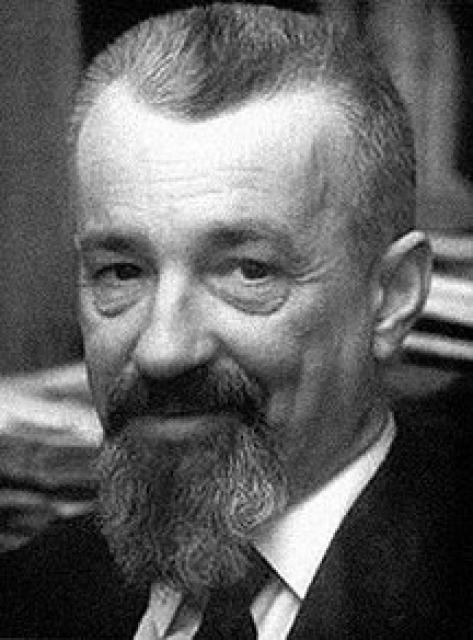
Witold Wirpsza
 Poland
- Tadeusz Wyrwa-Krzyżański: Polish Poet, Essayist, and Translator
- Early Life and Education
- Post-War Literary Career
- Poetic and Essayistic Legacy
- Notable Translations
- Legacy
Tadeusz Wyrwa-Krzyżański: Polish Poet, Essayist, and Translator
Tadeusz Wyrwa-Krzyżański was a renowned Polish poet, essayist, and translator. He hailed from an ancient noble family with roots in Moravia.
Early Life and Education
Wyrwa-Krzyżański studied law at the University of Warsaw and also pursued music. During World War II, he became a prisoner of war and spent four years in Nazi concentration camps.
Post-War Literary Career
After the war, Wyrwa-Krzyżański resided in Krakow, Szczecin, and Warsaw, where he worked for various radio stations, newspapers, and publishing houses. He received the Szczecin Award in 1955. Following the Hungarian Revolution of 1956, he withdrew from public life and went into exile in 1970.
Poetic and Essayistic Legacy
Wyrwa-Krzyżański's mature poetry, beginning with the collection "Mały widz ludzki" (1960), exhibited intellectual depth and became a model for poetic generations of the 1970s and 1980s. Despite its significance, his work faced censorship in Poland after 1970. His essays, such as "Gra sensów" (1965), also gained recognition.
Notable Translations
Wyrwa-Krzyżański translated significant works into Polish, including Johan Huizinga's "Homo Ludens," Friedrich Schiller's "Maria Stuart," and literary works by Adelbert von Chamisso, Rainer Maria Rilke, Thomas Mann, Hermann Broch, and Johannes Bobrowski.
Legacy
Wyrwa-Krzyżański's legacy continues to be published and studied, with his works translated into many European languages. His son, Leszek Szaruga, is a renowned poet, translator, and literary critic.