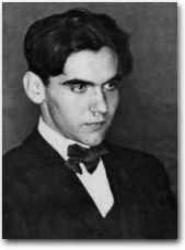
Evgeniy Horvath
 Germany
Biography of Evgeny Khorvat
Evgeny Khorvat was a Russian poet and later a German artist. He was born in Moscow, Russia, to renowned writer and psychotherapist Anatoly Dobrovich and Veronica Nikolaevna, a professor of Romance-Germanic languages at Moscow State University. His parents separated when he was just two years old.
In 1976, Khorvat moved to Kishinev with his mother and younger sister. He initially enrolled in the Journalism Faculty of Kishinev University in 1978 but left without completing his first year. From the early 1980s, he lived in Petrozavodsk, working as a janitor, before eventually returning to Kishinev.
Khorvat's involvement in an anti-Soviet leaflet distribution campaign organized by Kishinev poet Alexander Fradis in Leningrad's educational institutes, and his acquaintance with Petrozavodsk dissident Andrei Shilkov, drew the attention of the KGB. This influenced Khorvat's decision to leave the USSR.
In 1981, Evgeny Khorvat, along with his mother and sister, immigrated to Germany. He studied Slavic Philology at the University of Hamburg from 1984 to 1989, where he defended his master's dissertation on the philosophy of N. Fedorov's common cause. From 1990 to 1992, he worked as a translator for the Ministry of Internal Affairs under Bonn, teaching Russian language and mentality to German officers supervising disarmament in the CIS countries.
Simultaneously, Khorvat worked as a North German correspondent for the radio station Deutsche Welle in Cologne, as well as an editor and author for Overseas Publications Interchange Ltd. in London and the newspaper Russkaya Mysl in Paris. He started his self-taught journey in visual arts in 1985, initially focusing on painting and later moving onto concept art, including installations, happenings, and art projects such as "Death of Khorvat," "Artocracy," "Make Up," "Ready Man," "Rose of Peace" (unfinished), and "Europe's Trench."
Khorvat married Katarina, a German Slavic historian, in 1983, and they remained married until his death. He began experiencing mental disorders, including periods of acute psychosis, in the mid-1980s. Unfortunately, on September 12, 1993, Khorvat took his own life.
Since 1976, Khorvat attended the literary studio "Orbita" in Kishinev, associated with the newspaper "Molodyozh Moldavii." He quickly gained recognition for his exceptional talent. With the support of the studio's leader, poet Rudolf Ol'shevsky, Khorvat started publishing in "Molodyozh Moldavii." In exile, starting from 1981, his poems appeared in journals such as "Kontinent" and "Strelets," the newspaper Russkaya Mysl, and the anthology "U Goluboy Laguny."
In 1985, Khorvat established the publishing house "KHOR&TMA," under which he released several poetic books, both his own and those of other authors, in a semi-underground manner. In 1986, he published the collective anthology "Death of Khorvat," dedicated to the symbolic "death of the Russian poet Khorvat," after which he stopped writing poems. Influenced by the ideas of Joseph Beuys and Kurt Schwitters, he devoted himself to contemporary art. Under the pseudonym "Make Up," he participated in exhibitions in Germany.
In 1988, Khorvat attempted to turn his life into a total performance, and in 1992, based on this experience, he wrote the novel "Ready-Man" in German. Tragically, he took his own life on the eve of the opening of his first major installation, "Europe's Trench." The first posthumous publication of Khorvat's poems in Russia took place in 1994 in the journal "Znamya." His poems were later included in anthologies such as "Strophes of the Century" and "Samizdat of the Century." The release of the book "The Cast Off Mold of a Face" in 2005 sparked discussions about Khorvat's poetry as one of the most interesting phenomena in Russian literature of the late 20th century. Boris Kletinich, a friend of the poet, wrote a memoir dedicated to the publication of "The Cast Off Mold of a Face."