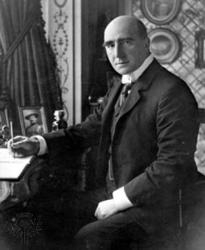
Wystan Auden
 Great Britain
- Wystan Hugh Auden: A Literary Colossus
- The Auden Group and Early Poetry
- Political Explorations and Social Commentary
- Literary Maturity and American Relocation
- The "Age of Anxiety" and Later Works
- Recognition and Legacy
Wystan Hugh Auden: A Literary Colossus
Early Life and EducationWystan Hugh Auden, born on February 21, 1907, was an English poet, playwright, critic, and essayist who revolutionized modern poetry through his masterful use of everyday language and conversational rhythms. He received his education at Gresham's School and Christ Church College, Oxford.
The Auden Group and Early Poetry
In the 1930s, Auden became the leader of a group of left-wing writers, including Stephen Spender, Christopher Isherwood, and Louis MacNeice. His debut collection, "Poems" (1930), reflected his Marxist, Darwinian, and Freudian influences, expressing a fascination with the decline of bourgeois society. However, unlike many communists, Auden was concerned not only with the masses but also with gifted individuals.
Political Explorations and Social Commentary
Audden's social criticism became more overt in "The Dance of Death" (1933), a free-verse fantasy, and in the poetic plays he co-wrote with Isherwood for the "Group Theatre" in London, such as "The Dog Beneath the Skin" (1933) and "The Ascent of F.6" (1936). These works grappled with the conflict between individual talent and political ideologies. His political engagements culminated in "Spain" (1937), one of his best poems on the topic and a stark response to the Spanish Civil War.
Literary Maturity and American Relocation
In 1939, Auden relocated to the United States and taught at various universities. His collections "Another Time" (1940), "The Double Man" (1941), and "For the Time Being" (1944) marked a departure from Marxism and psychoanalysis towards Christian values, requiring the revision of many earlier works for his "Collected Poetry" (1945).
The "Age of Anxiety" and Later Works
Audden's "baroque eclogue," "The Age of Anxiety" (1947), reflected the post-war era's anxieties and uncertainties. His later poetry collections, including "Nones" (1951), "The Shield of Achilles" (1955), "Homage to Clio" (1960), "Collected Longer Poems" (1969), and "Thank You, Fog. Last Poems," showcased his enduring brilliance. He also published acclaimed prose works, such as "The Dyer's Hand and Other Essays," and critical essays in "Forewords and Afterwords."
Recognition and Legacy
Auden's exceptional contributions to literature earned him numerous accolades, including the Bollingen Prize in Poetry (1953) and the National Medal for Literature (1967). He died on September 29, 1973, leaving behind a vast and influential literary legacy that continues to inspire generations of poets and readers alike.