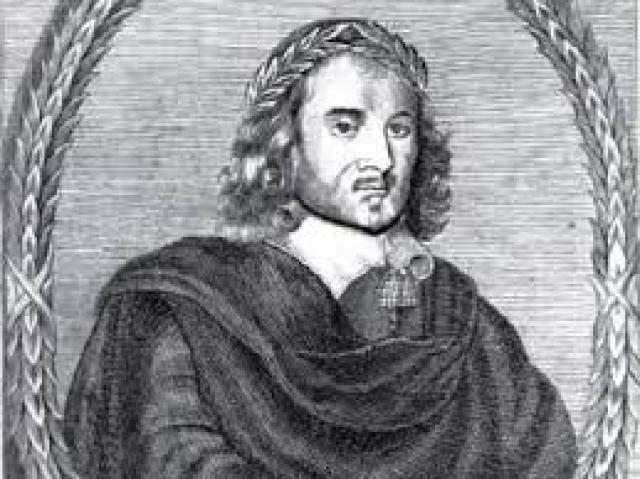
Thomas Middleton
 Great Britain
- Thomas Middleton: A Jacobean Playwright's Journey
- Literary Beginnings
- Theatrical Partnerships and Successes
- Financial Struggles and Alternative Income
- Literary Maturity and Genre Transitions
- Late Masterpieces and Allegory
- Legacy
Thomas Middleton: A Jacobean Playwright's Journey
Early Life and EducationBorn in April 1580, Thomas Middleton was the son of a London mason. He enrolled at Oxford University in 1598 but seemingly never obtained a degree.
Literary Beginnings
While still a student, Middleton published several poems. Upon returning to London in 1601, he entered the theatrical world. His early plays, co-written with playwrights like Thomas Dekker, have been lost.
Theatrical Partnerships and Successes
In 1604, Middleton and Dekker collaborated on "The Honest Whore (Part One)," followed by satirical pamphlets "The Ant and the Nightingale" and "The Black Book." Between 1603 and 1608, Middleton wrote plays for children's acting companies, later joining adult ensembles. From 1615, he worked with the prominent troupe the King's Men.
Financial Struggles and Alternative Income
Falling into debt in 1611-1612, Middleton turned to writing city pageant texts, eventually becoming London's official chronicler in 1620.
Literary Maturity and Genre Transitions
Middleton's first significant successes came in 1606-1607 with comedies "Michaelmas Term," "A Mad World, My Masters," and "A Trick to Catch the Old One." These works featured lively plots, humorous banter, and social commentary. His greatest city comedy, "The Chaste Maid in Cheapside," exhibited sharp wit and emotional depth.
Over time, Middleton ventured into tragicomedy and tragedy, incorporating verse and psychological motivations into his plays. His renowned tragedy, "A Fair Quarrel," depicts a mother sacrificing her reputation to prevent her son's duel.
Late Masterpieces and Allegory
Middleton's later works included two harrowing tragedies, "Women, Beware Women" and "The Changeling," exposing moral decay. Of note is also his allegorical play "The Game at Chess," possibly his final work, portraying England and Spain as chess opponents.
Legacy
Thomas Middleton's body of work reflected the shifting social landscape of early 17th-century England. His versatile writing, from farcical comedies to psychological tragedies, left a lasting impact on Jacobean theater. He died in Newington Butts, London, on July 7, 1627.


