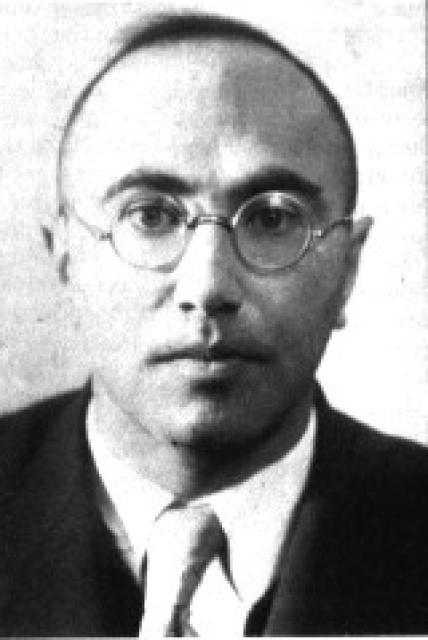
Yakov Zeldovich
- Yakov Borisovich Zel'dovich: Soviet Physicist and Astrophysicist
- Education and Early Career
- Nuclear Physics and Defense Work
- Relativistic Astrophysics
- Cosmology
- Later Career and Honors
- Legacy
Yakov Borisovich Zel'dovich: Soviet Physicist and Astrophysicist
Born in Minsk on March 8, 1914, Yakov Borisovich Zel'dovichwas a renowned Soviet physicist, physical chemist, and astrophysicist. His contributions to theoretical physics, especially in the fields of relativistic astrophysics and cosmology, have left an enduring legacy.
Education and Early Career
Despite not completing higher education, Zel'dovich immersed himself in self-study and attended lectures at various institutions. In 1934, he enrolled in the graduate program at the Institute of Chemical Physics (ICP) of the USSR Academy of Sciences (AN SSSR), where he defended his doctoral dissertation in 1939. From 1938 onwards, he headed a laboratory at ICP.
Nuclear Physics and Defense Work
During the Second World War, the ICP was evacuated to Kazan, where Zel'dovich worked on defense projects until 1943. Later, from 1948 to 1965, he made significant contributions to the development of atomic and hydrogen bombs, earning him the Lenin Prize and three titles of Hero of Socialist Labor of the USSR.
Relativistic Astrophysics
Starting in the 1960s, Zel'dovich became a key figure in theoretical astrophysics. He co-founded the field of relativistic astrophysics, which applies the principles of general relativity to astrophysical objects. His theories on the structure of supermassive stars and compact stellar systems have found application in understanding the processes occurring in galactic nuclei and quasars.
Cosmology
Zel'dovich also made groundbreaking contributions to cosmology. He investigated the initial stages of the expansion of the universe and developed theories on the interaction of hot plasma and radiation in the early universe. His work on the growth of perturbations in the "hot" universe provided insights into the formation of galaxies through gravitational instability. He also discovered that such high-density formations, likely protoclusters of galaxies, are typically flattened. Many of Zel'dovich's predictions have been confirmed experimentally.
Later Career and Honors
From 1965 to 1983, Zel'dovich headed a department at the Institute of Applied Mathematics of the AN SSSR. He also held positions as professor at Moscow State University (MGU) and head of a department at the State Astronomical Institute named after P.K. Shternberg (GAISH MGU). He was elected a corresponding member of the AN SSSR in 1946 and a full member in 1958. Among his numerous honors, Zel'dovich received the I.V. Kurchatov Gold Medal in 1977 for his work on ultracold neutrons and the K. Bruce Medal of the Pacific Astronomical Society in 1983.
Legacy
Yakov Borisovich Zel'dovich passed away on December 2, 1987. He left behind a remarkable legacy as one of the pioneers of relativistic theoretical astrophysics. His meticulous research and groundbreaking discoveries have shaped our understanding of the universe and continue to inspire scientists today.


