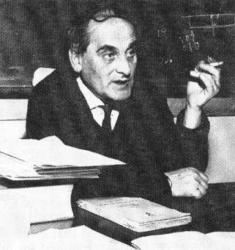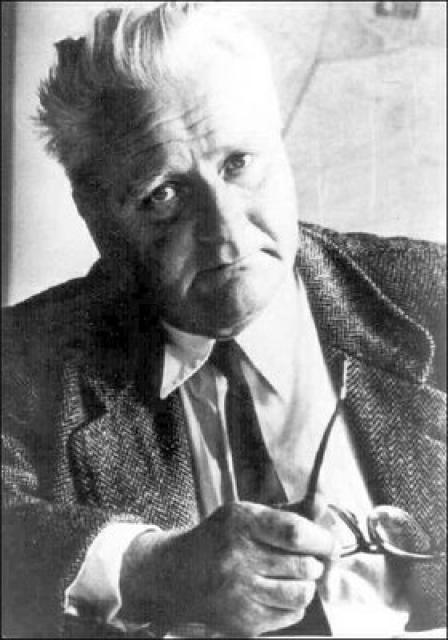
Eugen Sanger
 Austria
- Early Life and Education
- Early Career and Publications
- Project "Silbervogel"
- DFR and Post-War Work
- Return to Germany and Death
- Legacy
- Personal Life
Early Life and Education
Austrian physicist Eugen Sänger was born in the village of Pilsen (now Přešnice, Czech Republic) in the Austro-Hungarian Empire on September 22, 1905. He studied at the Technical University of Graz and later at the Vienna University of Technology, where he graduated in 1929.
Early Career and Publications
After graduating, Sänger worked as an assistant at the Vienna University of Technology. In 1934, he published a groundbreaking article outlining the possibility of developing a long-range rocket-powered bomber. This publication laid the foundation for his future work in rocketry.
Project "Silbervogel"
Following the annexation of Austria by Nazi Germany in 1938, Sänger became the head of Project "Silbervogel" (Silver Bird), a top-secret program to develop a suborbital bomber spacecraft. However, the project was frozen in June 1941 due to a lack of resources.
DFR and Post-War Work
Sänger continued his work in rocketry after the freezing of Project "Silbervogel," joining the German Aerospace Research Institute (DFR) in 1944. However, the end of World War II saw the project abandoned. Sänger then moved to France, England, and Switzerland, where he continued his research on photon rocket engines.
Return to Germany and Death
In 1957, Sänger returned to Germany, where he continued his research at the University of Stuttgart. He died in Berlin on February 10, 1964, at the age of 58.
Legacy
Sänger's pioneering work in rocketry made him a significant figure in the field. His theories and designs have had a lasting impact on the development of space technology. The German Aerospace Center (DLR) named the Sanger II concept after him, a concept vehicle for a hypersonic passenger transport.
Personal Life
Sänger was married to Irene Bredt, a mathematician who assisted him with the calculations for his project.