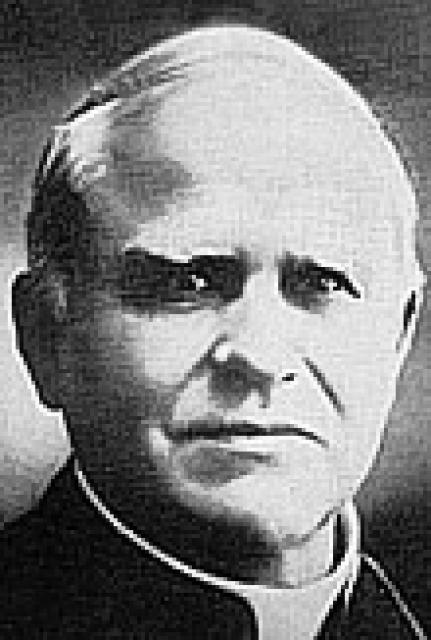
Yan Tseplyak
 Poland
- Birth and Education
- Ecclesiastical Career in Russia
- Activities during the Russian Revolution
- Anti-Bolshevik Activities
- Trial and Imprisonment
- Release and Later Life
Birth and Education
Jan Hyacinth Cieplak was born on August 17, 1857, in Dombrów in the Kielecka Governorate of the Russian Empire (now Poland). He completed his seminary studies at Kielce in 1878 and went on to specialize in dogmatic theology at the Spiritual Academy in Saint Petersburg.
Ecclesiastical Career in Russia
Cieplak became the librarian of the Spiritual Academy. In 1897, his elevation to rector of the Kielce Seminary was prevented by the authorities. In 1909, he became president of the Spiritual College in Saint Petersburg. However, he was dismissed from this position due to his pro-Polish activities.
During World War I, Cieplak administered the Mogilev diocese and engaged in missionary and charitable work. In 1917, he became the Bishop of the Polish Army. After the February Revolution, he led the Mogilev archdiocese, which encompassed all of Russia.
Activities during the Russian Revolution
Cieplak welcomed the Russian Revolution as an opportunity for religious freedom. He urged Catholics to support the Provisional Government and pledged their loyalty. He also appealed to the Vatican to intervene on behalf of a condemned Orthodox priest in Prague.
Anti-Bolshevik Activities
After the October Revolution, Cieplak initially believed that the Catholic Church would enjoy more autonomy under the Soviet regime. However, he soon became disillusioned and recognized the threat posed by communism.
He instructed priests to prioritize religious education and called for the establishment of Catholic schools. He also directed the creation of a central committee to guide the political activities of the faithful. In 1919, he was arrested and imprisoned for his anti-Bolshevik sermonizing.
Trial and Imprisonment
In 1923, Cieplak was convicted of counter-revolutionary activities and sentenced to death. However, due to international protests and a plea for clemency, his sentence was reduced to 10 years in prison.
Release and Later Life
In 1924, Cieplak was released and deported to Poland. He moved to the United States in 1925 and was appointed metropolitan that same year. He died in Passaic, New Jersey, on February 17, 1926, and was buried in Vilnius, Lithuania.