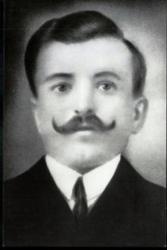
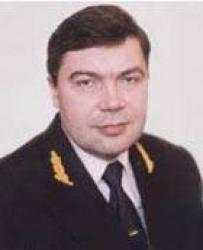
Yanosh Cadar
 Hungary
- Biography of János Kádár
- Early Life and Activism
- Political Career
- Arrest and Rehabilitation
- Revolutions and Leadership
- Economic Reforms and Legacy
Biography of János Kádár
János Kádár was a prominent leader of the Hungarian Communist Party and the head of socialist Hungary. He was born on May 26, 1912, in southern Hungary, into a family of laborers.
Early Life and Activism
Kádár received training as a machinist and in 1931, he joined the underground Communist Youth League. The following year, he became a member of the illegal Communist Party of Hungary and in 1937, he joined the party's underground leadership. During World War II, Kádár played a significant role in organizing the Hungarian Resistance Movement.
Political Career
After the war, Kádár served as the deputy chief of police in Budapest in 1945. Simultaneously, he held leadership positions within the Communist Party, heading its organizational department. When the Communists seized power in 1948, Kádár actively participated in the formation of the Hungarian Working People's Party. From 1948 to 1950, he served as the Minister of Interior. During this time, he also participated in the trial of the popular Communist leader László Rajk, who was accused of "Titoism."
Arrest and Rehabilitation
In 1951, Kádár himself was arrested on suspicion of "Titoism." However, he was released and rehabilitated in 1954. Following his release, he was appointed as the secretary of a district party committee in Budapest and on July 6, 1956, he became a member of the party's Central Committee.
Revolutions and Leadership
In October 1956, amidst the Hungarian Revolution, Kádár became the head of the "Revolutionary Worker-Peasant Government" under Soviet control. From 1957 to 1988, he was the unquestioned leader of the Hungarian Socialist Workers' Party (HSWP), serving as the party's general secretary from 1985. During his tenure, he also held the positions of Chairman of the Hungarian Revolutionary Worker-Peasant Government from 1956 to 1958 and Chairman of the Council of Ministers of the Hungarian People's Republic from 1961 to 1965.
Economic Reforms and Legacy
Kádár was known for his pragmatism in economics. In 1968, he introduced the "New Economic Mechanism," which granted state-owned enterprises relative decision-making freedom. The model allowed for the operation of a large number of private enterprises. Kádár's "goulash communism" contributed to Hungary becoming one of the most prosperous countries in the Soviet bloc.
During the 1960s, Kádár was arguably the most popular communist leader in Eastern Europe. However, his popularity waned during the economic decline of the 1980s. Despite this, he remained the general secretary of the party until his resignation in May 1988.
János Kádár passed away in Budapest on July 6, 1989, leaving behind a complex legacy as a leader who oversaw both periods of political repression and economic prosperity in Hungary.