Ye Jianying
 China
ChinaBiography of Ye Jianying
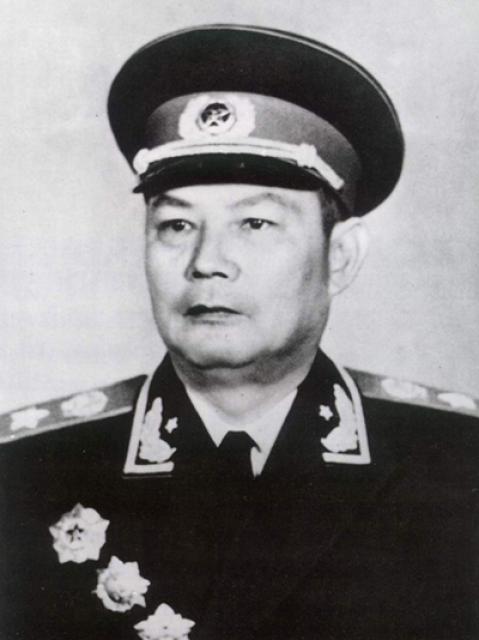
Ye Jianying was a Chinese politician and marshal of the People's Republic of China. He served as the Chairman of the Standing Committee of the National People's Congress from 1978 to 1983.
Early Life and Career
Ye Jianying was born on April 28, 1897, in Mei County, Guangdong Province, into a wealthy Hakka merchant family. In 1919, he graduated from the Yunnan Military Academy and joined the Kuomintang (KMT). He later taught at the Whampoa Military Academy. In 1927, Ye joined the Communist Party of China (CPC) and participated in the Nanchang Uprising. Alongside two other leaders of the uprising, Zhou Enlai and Ye Ting, he was forced to flee to Hong Kong. That same year, Ye took part in the Guangzhou Uprising, despite being opposed to its organization. After the uprising's failure, he was once again forced to flee to Hong Kong. Ye managed to evade all accusations regarding the uprising's failure and was sent to Moscow in 1928 to study military affairs at the Sun Yat-sen University.
Political and Military Career
Ye Jianying returned to China in 1932 and served in the staff of Zhang Guotao's Fourth Army. During the "Long March," a conflict arose between Zhang Guotao and Mao Zedong over further actions. Zhang advocated for leading the troops south and establishing a base in areas inhabited by Tibetans and the Tujia ethnic minority. However, Zhang lost 75% of his forces in this campaign and returned to Yan'an. Ye gradually became sympathetic towards Mao and switched sides, leaving Zhang's camp with all the codebooks and maps. As a result, Zhang lost communication with the Comintern. Mao established contact with the Comintern and soon took leadership of the CPC. Mao never forgot Ye's contributions and once said, "Ye Jianying saved the Party, the Army, and the Revolution."
During the Sino-Japanese War from 1937 to 1945, Ye worked as the representative of the CPC Central Committee in Chongqing, under the government of Chiang Kai-shek. After the founding of the People's Republic of China in 1949, Ye led the Guangdong Provincial Committee of the CPC from 1949 to 1953. He understood that the economic situation in Guangdong differed from the rest of the country and opposed a harsh version of land reform. However, the central government's general policy called for more stringent reforms. Soon, all positions in the provincial government were filled with Lin Biao's supporters, and Ye's career began to decline. Mao, however, did not forget Ye's contributions during the "Long March" and only removed him from political positions, allowing him to retain all his military posts. Until 1966, Ye held various military positions in China, including the Minister of Defense, and was awarded the rank of marshal in 1955. Using his military influence, Ye defended and supported reformists like Zhao Ziyang and prevented an assassination attempt on Deng Xiaoping during the Cultural Revolution.
Later Years and Legacy
After Mao's death, Ye participated in the overthrow of the "Gang of Four." From 1978 to 1983, he held the position of Chairman of the Standing Committee of the National People's Congress, serving as the formal head of state during that time. He left the position of Deputy Chairman of the CPC after it was abolished in 1982 and stepped down from the Politburo in 1985.
Ye Jianying passed away on October 22, 1986, in Beijing at the age of 89.