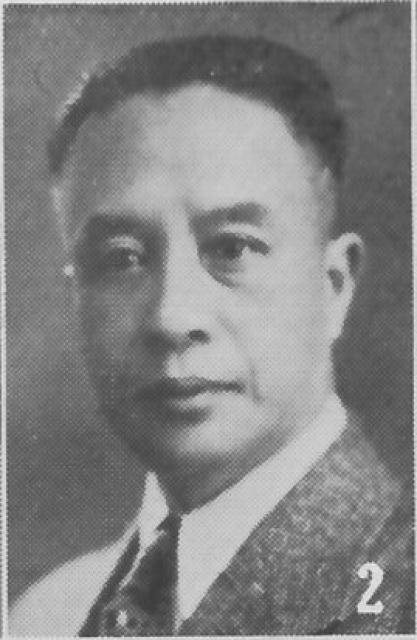
Yin Ju-keng
 China
China- Early Life and Education
- Activism and Return to China
- Service in the Peking Government
- Collaboration with the Fengtian Clique
- Northern Expedition and Political Appointments
- Anti-Communist Autonomous Government of East Hebei
- Collaborator with Japan and Execution
Early Life and Education
Born in Pingyang County, Zhejiang Province, Yin Rugeng was sent to Japan by his wealthy father in 1902 to study the Japanese language. In 1905, he enrolled in Tokyo Imperial University's preparatory school and the following year entered the 7th Military Preparatory School.
Activism and Return to China
During his time in Japan, Yin Rugeng became an active member of the Tongmenghui, a revolutionary organization that aimed to overthrow the Qing dynasty. At the behest of Tongmenghui leader Huang Xing, he returned to China to lead revolutionary activities in Hubei Province. After the establishment of the Republic of China, Yin Rugeng joined the Kuomintang.
Service in the Peking Government
After attending the 2nd Kuomintang Conference in 1913, Yin Rugeng decided to return to Japan to pursue further education at Waseda University. In 1916, he returned to China and joined the Peking government. He played a key role in organizing the Bank of China and opposed the Movement for the Protection of the Constitution.
Collaboration with the Fengtian Clique
Following the Zhili-Anhui War, Yin Rugeng briefly fled to Japan. Upon returning to China, he found the country embroiled in warlordism. He joined forces with General Guo Songling of the Fengtian Clique, serving as his foreign affairs liaison. However, after Guo Songling's defeat and death, Yin Rugeng escaped to Japanese territory.
Northern Expedition and Political Appointments
In 1926, Yin Rugeng joined the Northern Expedition and played a role in the capture of Nanchang. He was appointed chief of external relations for the National Revolutionary Army (NRA), handling relations with the Imperial Japanese Army. The following year, after the Shanghai Massacre of 1927, he became the chief secretary to Shanghai Mayor Huang Fu and once again oversaw relations with the Japanese.
Anti-Communist Autonomous Government of East Hebei
In 1933, a demilitarized zone was established in Hebei Province in accordance with the Tanggu Truce. Yin Rugeng was appointed as its commissioner. Influenced by General Kenji Doihara, he declared his administration as the Anti-Communist Autonomous Government of East Ji on November 15, 1935, independent from the Nanjing government.
Collaborator with Japan and Execution
In July 1937, Yin Rugeng secretly conspired with Kuomintang General Song Zheyuan to remove Japanese control. However, the Tongzhou Mutiny failed, and only Yin Rugeng's acquaintance with Japanese right-wing leader Toyama Mitsuru spared him from execution. After five years in Japan, he returned to China and joined Wang Jingwei's collaborationist government but was given a minor post in Shanxi Province. In 1944, he was offered a cabinet position but resigned shortly after.
Following Japan's surrender, Yin Rugeng was arrested by the Republic of China authorities for treason. At his trial in Nanjing, he denied all charges, claiming he had acted out of patriotism. On November 8, 1947, the Supreme Court sentenced him to death by firing squad. The sentence was carried out in Nanjing on December 1, 1947.


