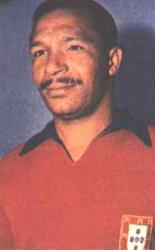
Yozhef Sabo
 Ukraine
- Childhood and Early Career
- Rise to Prominence with Dynamo Kyiv
- Retirement and Coaching Career
- Return to Dynamo Kyiv
- Coaching the Ukrainian National Team
- Legacy and Impact
Childhood and Early Career
Jozsef Jozsefovych Sabo was born on March 29, 1940, in Uzhhorod, Ukraine, into a family of ethnic Hungarians. Raised in a large family as the seventh child, Sabo's early life was marked by the hardships of World War II. His father, a carpenter, was drafted into the Hungarian army and later became a prisoner of war in the Soviet Union. After his release, he returned to his trade but tragically died of a heart attack in 1951.
Sabo's passion for football began at a young age, and he quickly emerged as a skilled player in the local youth leagues. Under the guidance of coach Zoltan Stepanovich Djerfi, he honed his skills and played for "Khimik" Kalush in the Ukrainian amateur championship in 1957.
Rise to Prominence with Dynamo Kyiv
In the mid-1950s, Sabo's talent caught the attention of Dynamo Kyiv, one of the most prestigious clubs in the Soviet Union. He joined the club in 1959 and made his debut in a friendly match against the renowned English club, Tottenham Hotspur. Sabo quickly became a key player for Dynamo, establishing himself as a dynamic and versatile winger on the right flank.
During his time at Dynamo, Sabo played a pivotal role in the club's three consecutive Soviet Championship titles from 1966 to 1968. He also made his mark at the international level, earning his first cap for the Soviet Union national team in 1965 and participating in the 1966 FIFA World Cup in England.
Retirement and Coaching Career
After leaving Dynamo Kyiv, Sabo played for Zarya Voroshilovgrad and Dynamo Moscow before retiring from his playing career. He then embarked on a successful coaching journey that spanned over four decades.
His coaching career began at Zarya Voroshilovgrad in 1977, where he guided the team to a respectable ninth place finish in the Soviet Championship. He also had stints with SKA Kyiv and Dnipro Dnipropetrovsk before returning to Dynamo Kyiv in the early 1990s.
Return to Dynamo Kyiv
Sabo's second spell at Dynamo Kyiv coincided with a period of transition for the club. He initially served as head coach for a brief period in 1992, but his major impact came during his tenure from 1994 to 1996. Under his leadership, Dynamo won the Ukrainian Premier League title and Ukrainian Cup in the 1995/96 season.
In 2004, Sabo returned to Dynamo Kyiv for a fourth time. He guided the team to victory in the UEFA Super Cup and inspired a memorable run in the UEFA Champions League, where they reached the last 16. However, despite his success, internal conflicts and a decline in results led to his resignation at the end of the season.
Coaching the Ukrainian National Team
In addition to his club coaching career, Sabo also led the Ukrainian national team on two separate occasions. His first stint began in 1994 and lasted until 1995, while his second tenure extended from 1996 to 1999.
During his second spell in charge, Sabo guided Ukraine to their first-ever play-off match in a major tournament, the UEFA Euro 2000 qualifiers. Despite coming close to qualifying, Ukraine ultimately missed out on a place in the tournament.
Legacy and Impact
Jozsef Jozsefovych Sabo is widely regarded as one of the most successful coaches in Ukrainian football history. He is credited with developing the talents of many talented Ukrainian players, and his influence continues to shape the country's football landscape.
His legacy extends beyond his coaching achievements. Sabo's dedication, passion, and unwavering belief in his players have inspired generations of aspiring footballers. He is remembered as a true icon of Ukrainian football, a man who dedicated his life to the sport he loved.