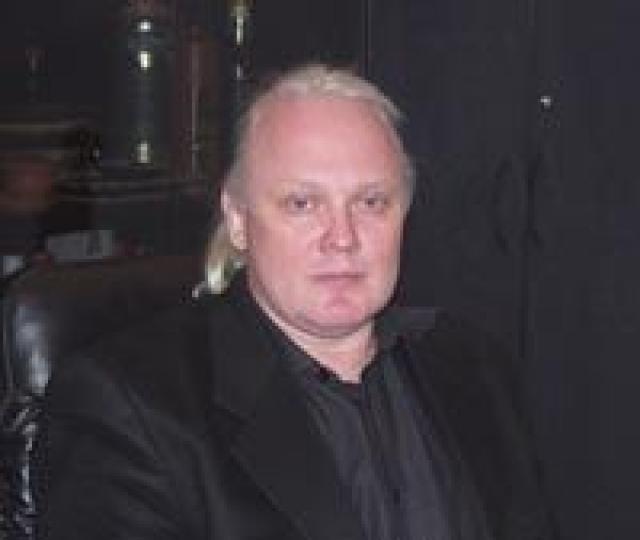
Yuri Sevostianov
 Russia
- Founder of "Russian Chanson": The Story Behind the Genre
- The Birth of "Russian Chanson"
- Launching a Revolution
- The Godfather of Chanson
- The Story of Mikhail Krug
- The Truth Behind Krug's Death
- The Inspiration Behind "Vladimirsky Central"
- The Quiet Power Behind the Scenes
- The Prevalence of Alcoholism
- Women in Chanson
- The Lure of Chanson for Failed Pop Stars
- The Future of Chanson
Founder of "Russian Chanson": The Story Behind the Genre
IntroductionYury Sevostyanov, the enigmatic figure behind the company "Russian Chanson," played a pivotal role in bringing this genre to the forefront of Russian music. Despite his low profile, Sevostyanov's contributions are undeniable.
The Birth of "Russian Chanson"
In the early 1990s, as the Soviet Union crumbled, the term "blatnyak" was used to describe songs that often glorified the criminal underworld. Sevostyanov, together with colleagues, recognized the potential of these songs to connect with a wider audience. They coined the term "Russian chanson" to distinguish it from its more vulgar predecessor.
Launching a Revolution
In 1994, Sevostyanov's company released over five million albums under the "Russian Chanson" label. Simultaneously, a television program of the same name launched, solidifying the genre's presence in the mainstream. By introducing Russian chanson to the masses, Sevostyanov challenged the prevailing perception of the genre as solely for criminals.
The Godfather of Chanson
Sevostyanov's influence extended beyond record labels. He played a crucial role in the careers of numerous chanson stars, including Mikhail Krug, Alexander Rosenbaum, and Ivan Kuchin. Sevostyanov's paternalistic approach earned him the moniker "Godfather of Russian Chanson."
The Story of Mikhail Krug
Sevostyanov discovered Krug in 1994 and became his first producer. Together, they created a star whose music resonated with millions. Krug's tragic death in 2002 left a lasting void in the genre, and Sevostyanov has dedicated himself to preserving his legacy.
The Truth Behind Krug's Death
Sevostyanov has his own theory regarding Krug's murder. He believes it was an unintentional killing, motivated by greed. He suspects that the robbers, knowing Krug had received a large sum of money, targeted his home in search of it.
The Inspiration Behind "Vladimirsky Central"
One of Krug's most iconic songs, "Vladimirsky Central," almost never came to light. A close friend advised Krug against recording it, calling it "crap." Fortunately, Krug ignored his advice and created a song that became a timeless classic.
The Quiet Power Behind the Scenes
Despite his influence, Sevostyanov has preferred to remain out of the spotlight. He believes his main responsibility is to support the artists he represents. However, the occasion of the 10th anniversary of "Russian Chanson" prompted him to share his insights and shed light on the hidden world of the genre.
The Prevalence of Alcoholism
Sevostyanov acknowledges the association of chanson with heavy drinking, but emphasizes that stereotypes can be misleading. While some artists have struggled with addiction, many, like Krug himself, have never been in prison. He believes that the genre's raw lyrics often reflect the hardships and misfortunes of its creators.
Women in Chanson
Sevostyanov believes that women generally lack the authenticity to perform chanson effectively. With the exception of Lyubov Uspenskaya, whose experiences as an immigrant gave her a unique perspective, he finds most female chanson singers lacking in substance.
The Lure of Chanson for Failed Pop Stars
Sevostyanov notes that some singers have transitioned to chanson after failing to achieve success in pop music. He cites Kristina Pozharskaya, who reinvented herself as Katya Ogonek and became one of the genre's biggest stars.
The Future of Chanson
Sevostyanov believes that chanson will continue to thrive, despite its detractors. He sees the genre's appeal in its ability to convey raw emotions and connect with the human experience.


