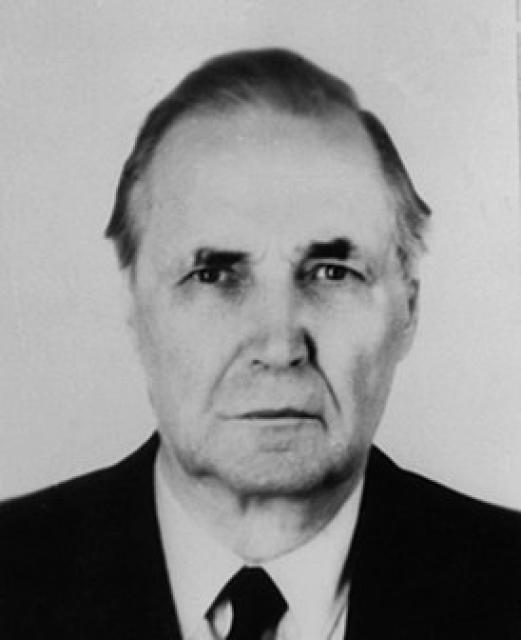
Yuriy Wipper
- Academic Career and Research
- Academic Affiliations and Publications
- Memberships and Positions
- Research Contributions
- Emphasis on Historicism
- Contributions to French Literature Studies
- Legacy and Honors
Academic Career and Research
Early Life and EducationYury Borisovich Vipper was born on February 28, 1924, in Moscow. The son of art historian B. R. Vipper and M. N. Shchenkova, he came from a family of academics. Vipper's intellectual upbringing shaped his future path in literature.
Academic Affiliations and Publications
Vipper began publishing in 1938 and graduated from the historical and philological faculty of the Latvian University in 1941. He taught at various institutions, including the N. G. Chernyshevsky Moscow State Institute of Philosophy, Literature, and History (1941), the Tashkent Pedagogical Institute (1941-1942), and the M. V. Lomonosov Moscow State University (1945-1964). In 1964, he joined the A. M. Gorky Institute of World Literature of the USSR Academy of Sciences, where he served as head of the department of world literature history from 1978 to 1988.
Memberships and Positions
Vipper was elected a corresponding member of the USSR Academy of Sciences in 1979 and an academician in 1987. He held positions as vice-president of the International Comparative Literature Association (1978-1984) and the International Federation of Modern Languages and Literatures (1984-1990). He was also a member of the Union of Writers of the USSR (1983) and the Bureau of the Department of Literature and Language of the USSR Academy of Sciences.
Research Contributions
Comparative Literature and Historical ApproachVipper's work played a significant role in the development of comparative literature and the historical-theoretical approach in literary studies. He focused on studying typological similarities and advocated for broadening the scope of national literatures studied to overcome Eurocentrism.
Emphasis on Historicism
Vipper's adherence to historicism in literary studies led him to challenge simplistic notions that viewed literary evolution as a mere reflection of historical processes. He believed that literature had its own unique dynamics and should be understood within its specific historical contexts.
Contributions to French Literature Studies
Vipper specialized in French literature, particularly the Renaissance (including the poetry of the Pléiade), Classicism, the Enlightenment, and Critical Realism. His studies on the formation of Classicism in French poetry in the 17th century received critical acclaim.
Legacy and Honors
Vipper's research and academic leadership have left a lasting impact on literary scholarship. He received numerous awards and accolades for his contributions, including the Order of the Red Banner of Labour and the Lenin Prize. Vipper passed away in Moscow on April 15, 2010, at the age of 86.


