Sid Grauman
 USA
USASid Grauman - a Biography
Sid Grauman, whose full name was Sidney Patrick Grauman, was born in Indianapolis, Indiana in 1879. However, he moved to Alaska at a young age with his father. During that time, America was going through a difficult period, with only a few becoming wealthy while others struggled to make ends meet. Despite not considering himself among the wealthy, Sid had a strong desire for money from a young age, which only grew as he got older.

On Alaska, Sid's father worked in the mines while Sid delivered newspapers. Everything went well until Sid's income surpassed his father's. It turned out that Sid was cleverly buying newspapers from the publisher and selling them in remote areas. To increase the price, he would read reports of baseball and football matches in a bar and then offer to sell the newspaper to those who wanted to find out the winner.
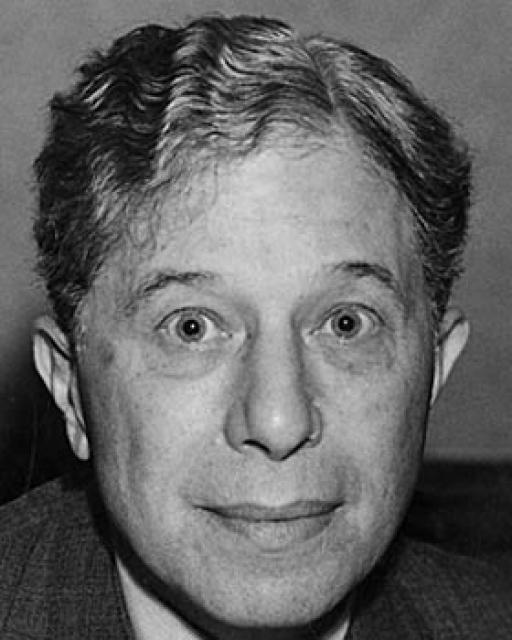
From an early age, Sid learned an important lesson - people are willing to pay for entertainment. Together with his father, they organized boxing matches and film screenings. Eventually, Sid's father, David Grauman, aimed to build a theater but could not achieve this due to illness and his departure to San Francisco. Accumulating some money, Sid followed his father and soon after his arrival, he established the vaudeville theater called the Unique Theater. It seemed unwise to put such a young boy in charge of a whole theater, but his brilliant leadership led the theater to success. Sid understood what was trendy, what people wanted, and how to surprise the audience. He was the first to combine vaudeville and cinematography in one performance. Within a few months, a second theater called the Lyceum Theater opened, but it was sold due to financial difficulties.
Sid played a significant role in the foundation of the Northwest Vaudeville Company, which provided performances across the country from San Francisco to New York City. However, in the early 1900s, their success was followed by failure. They had no money, and both theaters fell into other hands. When they managed to repurchase them, an earthquake struck, destroying a large part of the city, including both theaters. But even the earthquake couldn't break Sid's spirit. He retrieved a film projector and some movies from the rubble, set up an open-air theater, and hung a sign at the entrance that said, "In case of another earthquake, nothing will fall on you except the curtain."
A few days later, the Grauman family received a letter of gratitude from the city government for "supporting the morale of the city's residents during difficult times." Within two years, they had several movie theaters in different parts of the city and enough money to build new theaters in Los Angeles.
In 1918, a new and one of the largest movie theaters in the city, the Million Dollar Theatre, opened in the capital of California. A couple of years later, the Egyptian Theatre opened, which is still considered one of the most famous movie theaters in the world. However, this was just the beginning. Sid Grauman's greatest project, Grauman's Chinese Theatre, opened in 1926 and became the most successful theater in Los Angeles from the first day. The entire theater's decoration was ordered from China, and hundreds of sculptors and architects worked on the interior to recreate the atmosphere of China in the heart of Los Angeles.
Although the theater bears Sid Grauman's name, he was not its sole owner. Part of the building belongs to well-known actors and entrepreneurs, while the other part belonged to Sid himself. However, due to some circumstances, Sid sold his share to the Fox West Coast Theatres company but remained the sole director of the theater until his death.
Alongside this, Sid tried to establish other companies but was not successful. For example, his gold mining company, the Black Hills Exploration Corporation, quickly went bankrupt and closed, bringing him no profit.
Throughout his life, Sid remained a bachelor with no heirs. He had no property and lived in the most expensive room at the Ambassador Hotel. In his last months, he stayed at the Cedars-Sinai Medical Center. According to Sid, he was satisfied with everything except the food, so every day he had dinner at the most expensive restaurants in the city, bringing along friends from the hospital.
Sid Grauman passed away in his sleep on March 5, 1950. A few months before his death, he received an honorary Oscar award for his "significant contribution to the development of cinematography," despite never appearing on screen.
After Sid's death, a woman named Carrie Adair claimed that she had lived with the media mogul for a long time, and during that time, they had a daughter. However, this could not be verified as nobody close to Sid knew anything about his personal life.