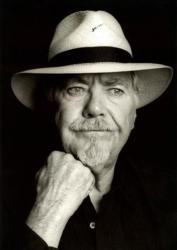
Yusef Shahin
 Egypt
EgyptBiography of Youssef Chahine
Youssef Chahine was an Egyptian director, screenwriter, actor, and educator. He was born in Alexandria and received his film education in the United States. Chahine made his debut feature film, "Papa Amin," in 1950, but gained recognition with the release of "Struggle in the Valley" (1954). This film, which incorporated elements of Westerns and Arab melodrama, exposed feudal tyranny prior to the 1952 national-democratic revolution. In 1958, Chahine directed the socially and politically charged film "Cairo Station" and the anti-colonial film "Jamila, the Algerian."
In 1963, Chahine created the epic historical film "Saladin the Victorious," associating the struggle of Muslim commander Saladin with the Arab liberation movement. He then moved to Beirut in 1965 and directed the film-operetta "The Ring Seller" with renowned Lebanese singer Fairouz. Chahine returned to Egypt in 1968 and directed the joint Soviet-Egyptian film "People and the Nile," which faced censorship issues and was released in 1972. His masterpiece "The Earth" was created in 1970, depicting the history of an anti-feudal peasant uprising and providing a profound analysis of social antagonisms in Egyptian villages in the early 1980s.
From the late 1970s, Chahine began to focus more on appealing to Western European audiences. He produced a wide-ranging autobiographical film trilogy, including "Alexandria... Why?" (1979), "An Egyptian Story" (1982), and "Alexandria Again and Forever" (1990). In 1985 and 1986, with the support of France, he directed the historical drama "Adieu Bonaparte" starring Michel Piccoli and the tragic film "The Sixth Day" featuring Dalida. These films demonstrated Chahine's detachment from the subjects he portrayed and a departure from his usual strong dramatic structure. Particularly, he combined glimpses of his personal life with the political upheavals of Egypt from the 1940s to the 1980s.
In later films like "The Emigrant" (1995), a psychoanalytical fable, and his final film, "Destiny," which incorporated elements of melodrama, Chahine employed similar techniques, utilizing cross-cutting and combining scenes in a constantly escalating pace. Chahine was also a professor at the Cairo Film Institute and collaborated with theater productions. Throughout his career, he directed a total of 31 feature films.
In addition to numerous national film awards, Chahine received international recognition, including the Golden Tanit in 1970 for his overall achievements at the Carthage Film Festival, the Silver Bear and the Grand Jury Prize in 1979 for "Alexandria... Why?" at the Berlin International Film Festival, and the Anniversary Prize at the 50th Cannes Film Festival in 1997 for his film "Destiny."