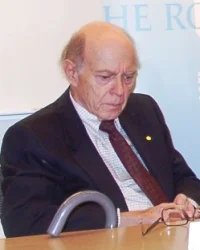
Yves Chauvin
Yves Chauvin was a French chemist whose explanation of olefin metathesis helped transform organic synthesis. In this reaction, carbon–carbon double bonds are rearranged, allowing chemists to build new molecules through efficient and selective processes. Chauvin received the 2005 Nobel Prize in Chemistry, sharing the award with Robert H. Grubbs and Richard R. Schrock for developing the metathesis method.
A career in industrial chemistry
Chauvin was born on October 10, 1930, in Menin, Belgium, to French parents. He studied at the École supérieure de chimie industrielle in Lyon, graduating in 1954. After beginning his career in industry, he joined the Institut Français du Pétrole in 1960. He spent most of his professional life there, working in homogeneous catalysis and leading its laboratory in the field.
Chauvin later described himself as largely self-taught in research. His work was closely connected to practical chemical processes, but he was also attentive to fundamental questions about how reactions occur. That combination helped him recognize the importance of understanding the molecular steps behind metathesis, a reaction that had been used in industrial settings without a clear explanation of its mechanism.
Explaining olefin metathesis
In 1971, Chauvin proposed a mechanism in which metal-containing catalysts generate reactive carbon compounds known as metal carbenes. These species interact with olefins, or molecules containing carbon–carbon double bonds, and exchange pieces of their molecular structures. The explanation clarified how metathesis works and provided a conceptual foundation for developing more effective catalysts.
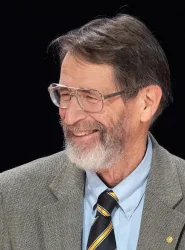
Chauvin’s mechanistic insight opened new possibilities for synthesis. Chemists could use metathesis to construct rings, form carbon–carbon bonds, and produce complex molecules with fewer steps and less waste. Later catalyst designs by Grubbs and Schrock made the reaction more versatile and easier to apply in laboratories and industrial settings. The Nobel committee recognized all three scientists for their contributions to making metathesis a powerful method in organic chemistry.
Recognition and legacy
Chauvin became a member of the French Academy of Sciences and continued as a respected researcher after retiring from the Institut Français du Pétrole in 1995. He received the Nobel Prize in Chemistry in 2005, an honor that brought international attention to a career built largely within a research institute rather than a university faculty.
He died on January 27, 2015, in Tours, France. His work illustrates how a clear explanation of a reaction can change what chemists are able to make. By identifying the mechanism of olefin metathesis, Chauvin helped turn a puzzling transformation into a reliable tool used across organic synthesis, materials science, and pharmaceutical research.