
Zachary Reyna
 USA
USA- Tragic Infection Leads to the Death of Zachary Rayne
- The Tragedy Unfolds
- A Perilous Journey
- A Dreadful Disease
- A Heartbreaking Loss
Tragic Infection Leads to the Death of Zachary Rayne
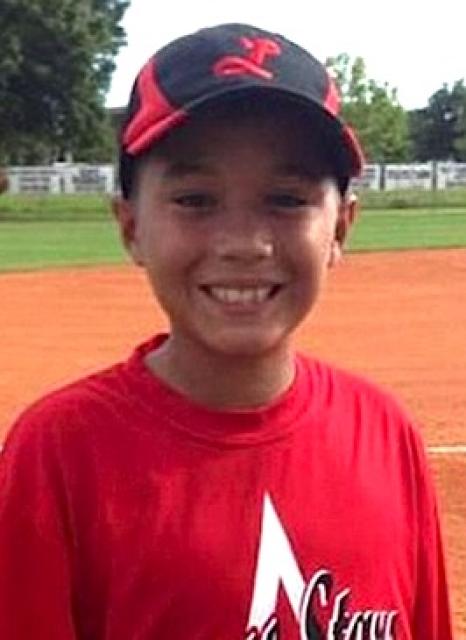
Zachary Rayne, a 12-year-old American boy, became the victim of a horrifying infection known as "brain-eating amoeba." This disease, which sounds more like a B-grade horror movie than a real-life threat, unfortunately exists in our world. Zachary fought against the deadly infection for 21 days, but despite his strength and the support of doctors, the brain-eating amoeba proved to be too powerful. Although medical professionals were eventually able to eliminate the infection from Zachary's body, it had already dealt a fatal blow to him.

The Tragedy Unfolds
Zachary contracted the primary amebic meningoencephalitis (PAM) disease when he was swimming in a nearby canal close to his home in LaBelle, Florida. The amoeba entered his body through his nose and traveled up his olfactory nerves into his brain, where it began its destructive work. The fateful swimming incident took place on August 3rd, and the following day, Zachary's parents noticed something was wrong. He had slept for an entire day and barely responded to their attempts to wake him up. They immediately rushed him to the hospital, where he was diagnosed with PAM. Zachary was admitted to the intensive care unit, and doctors began the battle against the insidious single-celled organism.

A Perilous Journey
During the early stages of Zachary's illness, his parents held onto hope that he would recover. Tests showed that the amoeba had been successfully eradicated. However, during the time it had spent in Zachary's body, the amoeba had caused significant damage to his brain. Doctors feared serious complications, but the reality exceeded even their most somber predictions. Another recent case of this infection occurred when 12-year-old Kali Hardig contracted it at a water park in Arkansas. Fortunately, she had better luck. A German anti-cancer drug called miltefosine, which is not approved in the United States but has shown impressive efficacy against various parasites, saved her life. Sadly, Kali's case was more of an exception than the rule. Since 1962, only three people, including Kali Hardig, have successfully fought this disease out of the 128 cases reported in the United States.
A Dreadful Disease
The amoebas that cause this disease can be found in warm water, particularly in contaminated bodies of water or swimming pools. Symptoms usually appear on the following day or, at most, within a week. Affected individuals suffer from severe headaches, fever, vomiting, seizures, and hallucinations. It is difficult to describe Kali's recovery as complete. She temporarily lost her ability to speak and is currently undergoing rehabilitation. Medical tests revealed that her brain had not sustained serious damage, likely because she did not contract the highly virulent strain. Unfortunately, Zachary Rayne was not as fortunate.
A Heartbreaking Loss
Doctors also used miltefosine on Zachary, and he underwent a complex brain surgery. However, they were unable to eliminate the amoeba quickly enough. The damage inflicted by the single-celled organisms proved to be fatal. Zachary's parents were devastated by the tragedy, finding solace in their faith and the support of those around them. Approximately 15,000 people follow the Facebook page dedicated to Zachary, where his parents announced their intention to donate his organs to those in need. Even after his death, Zachary will continue to help others.


