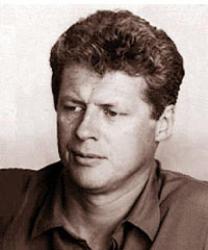
Zhang Yimou
 China
ChinaBiography of Zhang Yimou
Zhang Yimou, a renowned Chinese film director, was born on November 14, 1951, in Xian, Shensi province. His father was a former lieutenant colonel in the Kuomintang army. During the "Cultural Revolution," Zhang was expelled from school and sent to forced labor in an agricultural commune. Later, he worked at a spinning factory where he also served as a graphic designer and photographer.
Early Career
In 1978, Zhang Yimou passed the entrance exams for the Beijing Film Academy. Despite initially being rejected due to his age, he was eventually admitted after appealing to the Minister of Culture. In 1982, he graduated from the film academy as a cinematographer and was assigned to work at the Guangxi Zhuang Autonomous Region Film Studio. He made his debut as a cinematographer in the film "One and Eight" (1984) by director Zhang Junzhao. Zhang Yimou also worked as a cinematographer for films by his classmate Chen Kaige, including "Yellow Earth" (1984) and "The Big Parade" (1985).
Directorial Career
In 1987, Zhang Yimou made a brilliant directorial debut with the film "Red Sorghum." The lead role was portrayed by actress Gong Li, with whom Zhang would develop a deep personal and creative relationship. This drama gained immense popularity in China and received international recognition, winning the Golden Bear at the Berlin Film Festival. He followed this success with other acclaimed works such as "Ju Dou" (1990) and "Raise the Red Lantern" (1991), the latter of which won the Silver Lion at the Venice Film Festival. However, these films were banned by Chinese censors from being shown in China. Zhang's social comedy "The Story of Qiu Ju" and the romantic drama "To Live" were also received coolly by authorities in his homeland.
Controversies and Recognition
Zhang Yimou's thriller about the Chinese mafia in the 1930s, "Shanghai Triad," and the romantic comedy "Keep Cool," were withdrawn from the competition program of the Cannes Film Festival at the insistence of the Chinese government. Nevertheless, in 1999, Zhang Yimou received the Golden Lion at the Venice Film Festival for his film "Not One Less."
Throughout his career, Zhang Yimou's films have received critical acclaim and international recognition, showcasing his unique visual style and storytelling abilities. He continues to be one of China's most influential and celebrated directors.