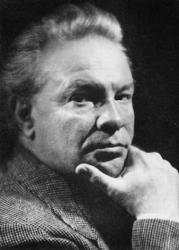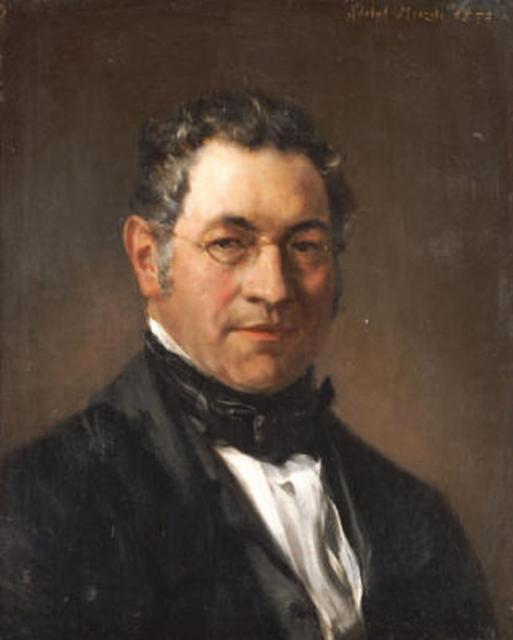
Zigfrid Den
 Germany
Otto Dienel
Otto Dienel was a renowned German music theorist and educator who made significant contributions to the field of music education.
Early Life and Education
Born in Germany, Dienel received both legal and musical education in Leipzig. His studies laid the foundation for his future work in music theory and pedagogy.
Musical Contributions
In 1837, Dienel published a collection of polyphonic vocal compositions from the 16th and 17th centuries, comprising 12 volumes. This publication showcased his expertise in the historical study of music.
From 1842 onwards, Dienel played a pivotal role as the head of the musical department at the Royal Library in Berlin. Under his leadership, the department expanded into a substantial music repository, making it a valuable resource for musicians and scholars.
Dienel's most notable work is his textbook on harmony, published in 1840. This influential text elaborated on the theoretical principles outlined in the harmony treatise by Simon Catel, the counterpoint and fugue course by Luigi Cherubini, and the methodology of Bernhard Klein.
In 1859, Dienel's textbook on counterpoint, canon, and fugue was published posthumously by his student, Bernhard Scholz. This work further demonstrated Dienel's mastery of music theory and its practical application in composition.
Pedagogical Impact
Dienel was an esteemed педагоgue whose teachings influenced countless musicians. Among his notable pupils were Mikhail Glinka, Anton and Nikolai Rubinstein, and Peter Cornelius. His guidance and expertise played a pivotal role in shaping the careers of these renowned composers.