Zofia Ventskovic-Ligeti
- Early Life and Involvement in the Russian Revolution
- Liberation and Career as a Journalist
- Disability and Contributions during the War
- Post-War Activities and Legacy
Early Life and Involvement in the Russian Revolution
Zofia Węckowicz, a Polish-born Russian revolutionary, was born in Vilnius in 1901. During World War I, her family relocated to Omsk, where she encountered members of the Bolshevik Party (RSDLP). Proficiency in foreign languages earned her a role in the Foreign Collegium, which disseminated propaganda among prisoners of war.
Association with Károly Ligeti and Hungarian Internationalist Detachment
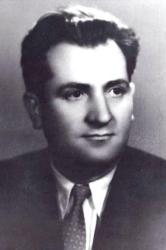
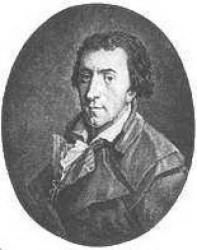
Węckowicz crossed paths with Károly Ligeti and became the commissar of his Hungarian internationalist detachment. However, after their defeat, both were captured. To coerce Ligeti's cooperation, Węckowicz endured torture, but to no avail. Following Ligeti's death, she was sent to Chita in a prison train and later transferred to the Verkhnoudinsk prison.
Liberation and Career as a Journalist
In 1920, Węckowicz was liberated by Red partisans, suffering from spinal injuries. Despite the need for extensive medical treatment, she opted to resume her political career in Eastern Siberia and the Far East. In 1930, she became the first editor-in-chief of the newspaper "Socialist Construction" in Petrovsk-Zabaikalsky. Her subsequent positions included editor-in-chief of "Udarnik" and editor of "Zabey" in other districts.
Disability and Contributions during the War
By 1937-1938, Węckowicz had become blind and paralyzed, restricting her physical abilities. Nevertheless, at the onset of World War II, she dedicated herself to collecting and sending songs, ditties, poems, and books to soldiers at the front, gathering these materials through schoolchildren.
Post-War Activities and Legacy
After the war, Węckowicz maintained an extensive correspondence with fellow revolutionaries. At the request of the Institute of History under the Central Committee of the Hungarian Socialist Workers' Party, she penned memoirs chronicling the experiences of Hungarian internationalists during the Russian Revolution. Her contributions to the revolutionary movement and her resilience in the face of adversity continue to inspire generations.