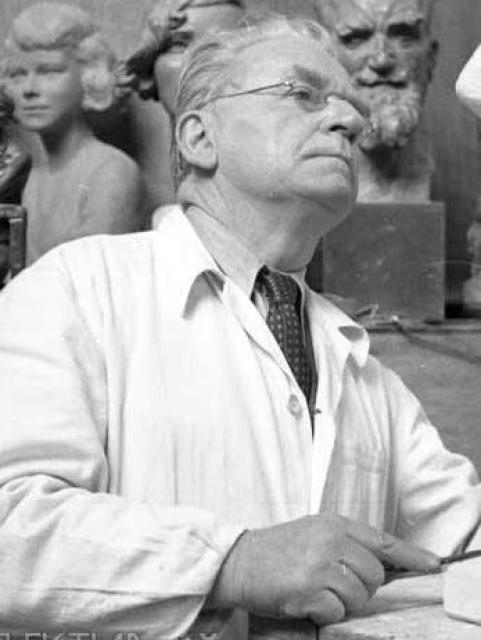
Zsigmond Kisfaludi Strobl
 Hungary
- A Life in Sculpture: Zsigmond Kisfaludi-Stróbl
- From the Battlefield to the Studio
- Recognition and Legacy
- International Collaborations
- A Lasting Impact
A Life in Sculpture: Zsigmond Kisfaludi-Stróbl
Zsigmond Kisfaludi-Stróbl, a Hungarian sculptor, left an indelible mark on the streets of Budapest and beyond. Born in Zsámbék, Hungary, in 1884, he pursued his artistic education at the Hungarian University of Fine Arts.
From the Battlefield to the Studio
Kisfaludi-Stróbl's life took a dramatic turn during World War I, where he served as a soldier. This experience would later influence his artistic style, infusing his sculptures with a sense of humanity and compassion.
Recognition and Legacy
Upon his return from the war, Kisfaludi-Stróbl dedicated himself to his craft. His talent and dedication were recognized in 1950 and 1953 when he was awarded the prestigious Kossuth Prize. Many of his sculptures, including "The Genius of Peace," "The Statue of Liberty," and the monument to Lajos Kossuth, became iconic symbols of Budapest.
International Collaborations
Kisfaludi-Stróbl's reputation extended beyond Hungary. He collaborated with renowned Soviet sculptor Yevgeny Vuchetich on the Monument to Hungarian-Soviet Friendship, which stands in Moscow's Druzhba Park. This collaboration showcased his ability to transcend boundaries and build bridges between nations.
A Lasting Impact
Zsigmond Kisfaludi-Stróbl's sculptures continue to grace public spaces and inspire generations. His realistic style captures the essence of humanity, while his monumental works embody the spirit of Hungary and its shared history. A true master of his craft, Kisfaludi-Stróbl's legacy lives on as a testament to the transformative power of art.



