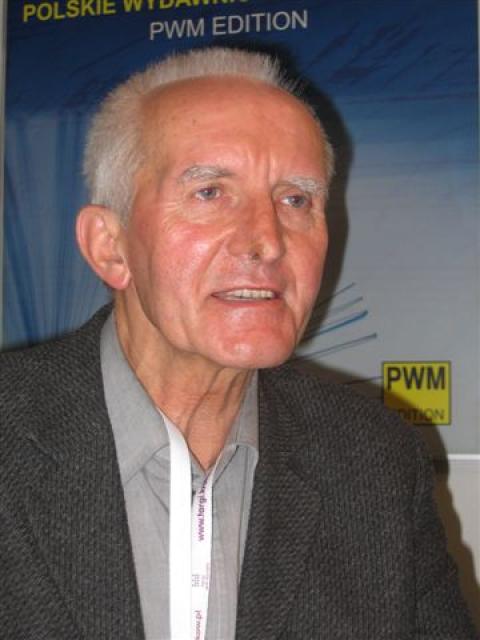
Zygmunt Konieczny
 Poland
- Zbigniew Preisner: A Maestro of Musical Storytelling
- Collaboration with "Piwnica pod Baranami"
- Film and Theater Music
- Collaborations with Acclaimed Filmmakers
- Late Works and Legacy
Zbigniew Preisner: A Maestro of Musical Storytelling
Early Life and EducationZbigniew Preisner was born in Bielsko-Biała, Poland, on May 20, 1955. He developed a passion for music at a young age and enrolled in the Kraków Academy of Music, graduating in 1962.
Collaboration with "Piwnica pod Baranami"
In 1959, Preisner joined the renowned Kraków cabaret "Piwnica pod Baranami." There, he established a close creative partnership with singer Ewa Demarczyk. Together, they pioneered the "spiewana poezja" (sung poetry) genre, which emphasized the primacy of poetic text and sparse musical accompaniment.
Film and Theater Music
Preisner's reputation as a composer extended beyond cabaret. From 1967, he worked extensively in film and theater. His compositions graced productions of "Hamlet," "A Midsummer Night's Dream," "The Cherry Orchard," and "The Master and Margarita."
Collaborations with Acclaimed Filmmakers
Preisner collaborated with notable directors such as Andrzej Wajda, Tadeusz Konwicki, and Antoni Krauze. His most renowned film scores include Wajda's "Landscape After Battle" (1970) and "The Possessed" (1988), Konwicki's "The Issa Valley" (1982), and Márta Mészáros' "Embers" (1981).
Late Works and Legacy
In his later years, Preisner composed the "Polish Litany" (2003) to the texts of Jan Twardowski. His music continues to inspire and move audiences worldwide, cementing his legacy as a master of musical storytelling and a trailblazing force in contemporary composition.


