Abdul Rahman Arif
 Iraq
Iraq- Abdul Rahman Arif: From Military Leader to Exiled General
- Presidency (1966-1968)
- Domestic Policies
- Foreign Policy
- Later Life and Death
Abdul Rahman Arif: From Military Leader to Exiled General
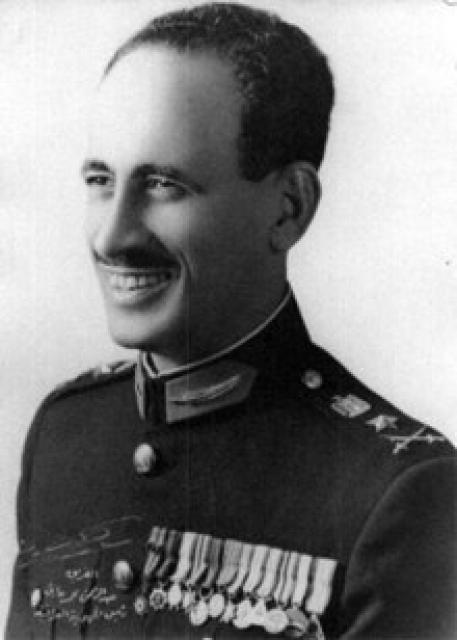
Early Life and Political InvolvementAbdul Rahman Arif was a prominent Iraqi military and political figure who served as President of Iraq from 1966 to 1968. He was born in Baghdad in 1916 and received his military education at the Iraqi Military Academy. Arif played a key role in the 1958 coup that overthrew the monarchy and established a republic. He also participated in the 1963 coup that brought his brother, Abdul Salam Arif, to power.
Presidency (1966-1968)
Following his brother's death in a plane crash in 1966, Abdul Rahman Arif became President of Iraq. His presidency was marked by political instability and economic challenges. Arif's government implemented a program of so-called "Arab socialism," which included agrarian reform, planning, and support for the private sector. However, it failed to address critical issues such as democratization, the Kurdish question, and economic development.
Domestic Policies
Despite Arif's efforts to appease various opposition groups, his regime faced growing political dissatisfaction. He clashed with the Ba'ath Party, which eventually overthrew him in a military coup in July 1968. Arif's government also continued military operations against Kurdish separatists. However, his visit to the Kurdish leader, Mustafa Barzani, in 1966 resulted in an agreement that aimed to resolve the conflict.
Foreign Policy
In foreign policy, Arif pursued Arab unity and normalized relations with the Soviet Union. He expanded cooperation with the United Arab Republic (Egypt) and nationalized key industries and businesses. However, his government's economic policies proved ineffective and failed to resolve Iraq's financial crisis.
Later Life and Death
After his overthrow, Arif went into exile. He returned to Iraq following the fall of Saddam Hussein's regime but left again due to political instability. Arif spent his final years in Jordan, where he passed away in 2007.