Aberdeen-Pasha
 Turkey
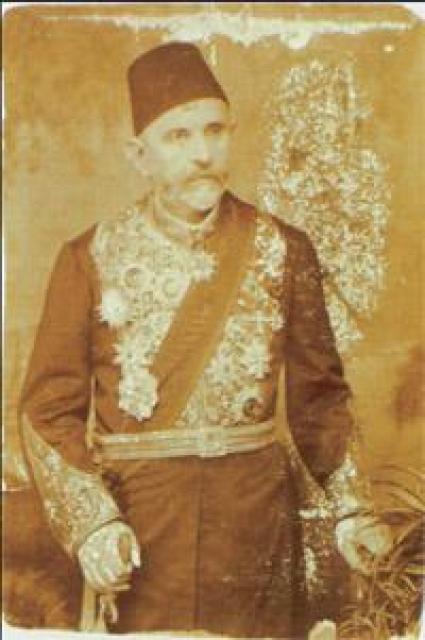
Abidin Pasha, also known as Abidin Dino, was an Albanian Ottoman statesman, governor, translator and writer. Born in Preveza in 1843, he rose through the Ottoman administrative service to hold provincial posts across the empire and briefly serve as minister of foreign affairs in 1880. He was also a scholar of languages and Sufi literature whose translation and commentary on Rumi’s Mathnawi became his best-known work.
Early Career and Public Service
Born into the prominent Dino family of Preveza, Abidin received his early education locally before going to Istanbul and entering state service. His administrative career took him through a range of posts, including district governor and provincial official in towns such as Preveza, Erbaa, Tekirdağ and Varna. He later served in legal and financial offices in the capital, including as a commissioner of the Istanbul stock exchange, and worked on government commissions.
During the Russo-Turkish War of 1877–78, he chaired an extraordinary commission in Janina, now Ioannina, in the context of growing tensions over the Ottoman-Greek frontier. He also became active in an Albanian committee in his hometown. The committee sought to prevent southern Albanian territories, including Preveza, Ioannina and Arta, from being transferred to Greece. His political work during this period reflected both his position as an Ottoman official and his Albanian identity.
Governor and Foreign Minister
Abidin held several senior provincial appointments. He served in Sivas and Thessaloniki before becoming Ottoman minister of foreign affairs on June 9, 1880. His tenure lasted about three months. He was then appointed governor of Adana, where he remained for more than four years, before returning to Sivas and later serving as governor of Ankara from 1886 to 1891. His final major provincial role was governor of the Mediterranean Islands province, known in Ottoman usage as Cezayir-i Bahr-i Sefid.
After retirement he returned to Istanbul, but was later appointed to a commission dealing with reform in Yemen. He died there in public service in Istanbul on May 9, 1906, and was buried in the Fatih district.
Scholarship and Writing
Abidin was notably multilingual. In addition to Turkish, he knew Albanian, Arabic, Persian, French and Greek, and had a strong command of the literature in those languages. He wrote Greek articles and poems that appeared in the Istanbul newspaper Neologos.
His most famous work is Tercüme ve Şerh-i Mesnevî-i Şerîf, a six-volume translation and commentary on the first book of the Mathnawi by the thirteenth-century poet and mystic Rumi. The work brought together close reading of the text with references to Islamic scholarship and philosophy. He also translated and commented on the Qasida al-Burda, and wrote religious and ethical treatises, including Âlem-i İslâmiyyet Müdâfaa and Saadet-i Dünya.
Abidin Pasha was the grandfather of the Turkish painter Abidin Dino, who was named after him. Remembered in Turkey and Albania as a statesman and intellectual, he left a legacy that joined imperial administration, regional Albanian politics and a serious literary engagement with the classical Sufi tradition.