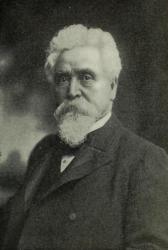
Abulfaragius
 Iran
Iran- Abul-Faraj Bar Hebraeus: Syrian Scholar and Encyclopedist
- The Mongol Invasion and Travels
- Episcopal Career and Elevation to Maphrian
- Relations with the Mongols and Influence
- Literary and Scholarly Contributions
- Historical Works
- Grammatical Works
- Autobiography and Legacy
- Death and Impact
Abul-Faraj Bar Hebraeus: Syrian Scholar and Encyclopedist
Early Life and EducationAbul-Faraj bin Hārūn al-Malaṭī, also known as Bar Hebraeus, was born in Malatya, Turkey, in 1226. His father, Aaron, was a Christian physician, and the family was relatively wealthy. As a young boy, Abul-Faraj received an education in Syriac, Greek, Arabic, theology, and philosophy. He also studied medicine under the guidance of his father and other doctors in the city.
The Mongol Invasion and Travels
In 1243, fearing an advancing Mongol army, most of Malatya's population fled to Aleppo. However, Abul-Faraj's family remained, and in 1244, his father joined the service of a Mongol general. After a period of service, Aaron was released and moved his family to Antioch, where Abul-Faraj continued his education. He became a monk in a Jacobite monastery and later traveled to Tripoli.
Episcopal Career and Elevation to Maphrian
In 1246, at the age of twenty, Abul-Faraj was ordained bishop of Gubos, near Malatya, by Jacobite Patriarch Ignatius III. He took the name Gregory. A year later, he became bishop of Lakaben, and in 1253, he was transferred to Aleppo with the same rank. In 1264, the new patriarch, Ignatius IV, appointed Abul-Faraj Maphrian of the Jacobites in Mesopotamia, a position he held until his death.
Relations with the Mongols and Influence
Abul-Faraj visited Maragha and Tabriz, the capital of the Ilkhanate, several times. He met with the Ilkhans Abaqa and Tekuder and advocated for the protection of all Christians, regardless of their denomination. In 1268 and 1272, he delivered lectures on Euclid and Ptolemy in Maragha. He also oversaw the construction of religious buildings in both cities.
Literary and Scholarly Contributions
Abul-Faraj was an incredibly prolific writer. His works covered a wide range of subjects, including medicine, history, philosophy, grammar, and theology. He was known as the "Beauty of the Age" for his comprehensive knowledge.
Historical Works
His most famous historical work, the "Chronicle," consists of two parts: a civil and political history and a history of the Syrian Church, Nestorians, and Antiochian patriarchate. Some of his theological writings, such as "The Treasure of Secrets," have also been published.
Grammatical Works
Abul-Faraj wrote several grammatical works, including a comprehensive collection and a concise Syriac grammar.
Autobiography and Legacy
Abul-Faraj's autobiography was published in "Bibliotheca Orientalis." His works are a testament to his exceptional scholarship and dedication to preserving knowledge. His legacy as a Syrian intellectual and encyclopedist continues to be celebrated to this day.
Death and Impact
Abul-Faraj died in Maragha on June 30, 1286. His death was widely mourned by Christians of all denominations. He is remembered as a distinguished scholar, prolific writer, and influential figure in the history of Syriac culture.