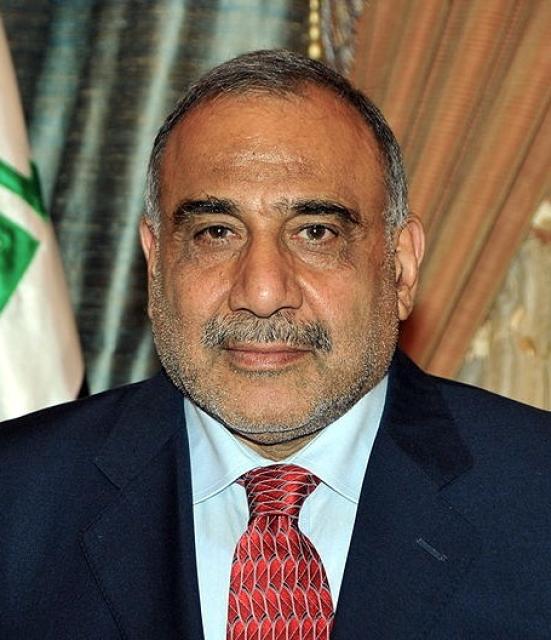
Adil Abdul-Mahdi
 Iraq
Iraq- Early Life and Education
- Political Career
- Embrace of Islamism and Alliance with Iran
- Post-2003 Political Roles
- - Minister of Finance (2004-2006)
- Prime Ministership and Legacy
- Assassination Attempts
Early Life and Education
Adil Abdul-Mahdi, an Iraqi Shia political figure and economist, was born to a respected Shia cleric who served as a minister in the monarchical era of Iraq. He received his secondary education at the elite Baghdad College, founded by American Jesuits. In 1963, he earned a Bachelor's degree in Economics from Baghdad University.
Political Career
Early Activism and Communist Party MembershipTwo years after graduating, Abdul-Mahdi began his political journey as the Third Secretary of the Iraqi Foreign Ministry. He later pursued further studies in Economics in France, where he had been in exile since 1969. He worked in various think tanks and edited French and Arabic language journals.
In the 1970s, Abdul-Mahdi became a leading member of the Iraqi Communist Party (ICP). However, following a split within the ICP between factions that supported or opposed cooperation with the military governments ruling Iraq since 1958, he became an active member of the latter.
Embrace of Islamism and Alliance with Iran
By 1980, Abdul-Mahdi had become influenced by the ideas of Islamic Iran and embraced Islamism as Ayatollah Khomeini suppressed communists and other liberal opposition groups in Iran. He led a splinter faction of the ICP to align with Iran, repudiating his Marxist past and dedicating the group's efforts to promoting Khomeini's ideology in France.
Abdul-Mahdi eventually became a member of the Supreme Council for the Islamic Revolution in Iraq (SCIRI), an exiled opposition party founded by Iran in Tehran in 1982, largely comprising Iraqi expatriates.
Post-2003 Political Roles
After the fall of Saddam Hussein's regime in 2003, Abdul-Mahdi held several senior positions in the Iraqi government:
- Minister of Finance (2004-2006)
- Vice President of Iraq (2005-2011)- Minister of Oil (2014-2016)
In 2006, he unsuccessfully ran for Prime Minister as the candidate of the Iraqi National Coalition (INC). He was also considered a potential candidate in subsequent elections.
Prime Ministership and Legacy
On October 2, 2018, President Barham Salih nominated Abdul-Mahdi as Iraq's new Prime Minister. He took office on October 25, 2018, emphasizing the importance of balancing relations with the United States and Iran while prioritizing Iraq's national interests.
Abdul-Mahdi's tenure as Prime Minister was marked by controversies and challenges. He resigned in December 2019 amid widespread protests over government corruption and unemployment.
Assassination Attempts
Abdul-Mahdi survived three assassination attempts, the most deadly of which occurred in 2007 with ten fatalities.


