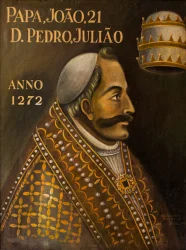
Agatho
Agatho was pope from 678 until his death in 681. A native of Sicily, he led the Roman Church through the final phase of the Monothelite controversy, a dispute over whether Christ had one will or two. His letters and the council he supported helped shape the doctrine adopted by the Third Council of Constantinople, one of the major church assemblies of the early Middle Ages.
From Sicily to Rome
Agatho was born in Sicily, probably toward the end of the sixth century. The surviving accounts offer few dependable details about his early life. Later tradition describes him as a monk before his election, and some accounts associate him with a monastery in Palermo. Stories that he lived to an exceptionally old age are difficult to verify.
He became pope in June 678, succeeding Donus. Agatho was known for an approachable manner and an ability to bring people together. His pontificate also included practical administration: he addressed church discipline, relations with other bishops and the financial burdens placed on the Roman see.
The Monothelite Controversy
The central theological conflict of Agatho’s papacy concerned Monothelitism. Its advocates taught that Christ had a single will, while opponents argued that Christ possessed both a divine and a human will, consistent with his two natures. The controversy had strained relations between Rome and Constantinople for decades.
Emperor Constantine IV convened a council in Constantinople to resolve the matter. Agatho prepared a statement of faith after consulting bishops at a Roman synod in 680, and sent papal representatives to the imperial capital. His letter argued that Christ’s two natures entailed two natural wills and operations, while affirming the unity of Christ’s person. The council, which met from 680 to 681 and is also called the Sixth Ecumenical Council, accepted this teaching and condemned Monothelitism.
Agatho did not live to see the council’s final decisions. He died in Rome on 10 January 681, while its sessions were still underway. His successor, Leo II, later confirmed the council’s acts.
Relations with England and the Eastern Empire
Agatho’s leadership extended beyond theology. He supported the English bishop Wilfrid in his appeal to Rome and sent church officials to assist with the spread of Roman liturgical practice in England. He also negotiated with the Byzantine government over the status and obligations of the papacy. These dealings took place in a period when Rome remained formally within the empire but increasingly managed its own affairs.
Legacy
Agatho is honored as a saint in both the Roman Catholic and Eastern Orthodox traditions. His brief papacy left a lasting mark through the council’s settlement of the dispute over Christ’s will. The episode also illustrates the growing role of the bishop of Rome in debates that concerned the entire Christian world.