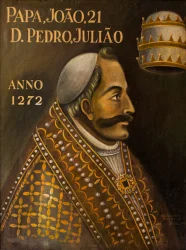
Anicetus
Anicetus was bishop of Rome during the mid-second century, traditionally dated from about 157 to 168. Little is known about his personal life, but his leadership is remembered for a notable meeting with Polycarp, bishop of Smyrna. Their discussion over when Christians should celebrate Easter revealed differences between eastern and Roman practices, yet the two leaders maintained a relationship of mutual respect.
Early Church Leadership
Later church lists place Anicetus among the early bishops of Rome, succeeding Pius I. The dates of his tenure are not certain, as surviving accounts were written generations after the events. The most important narrative about his time comes from Eusebius of Caesarea, who preserved earlier testimony from Irenaeus, a Christian writer who knew Polycarp.
The Roman Christian community was one among several influential churches across the Mediterranean. Leaders communicated with one another about doctrine, liturgy and disputes within their communities. Anicetus’s papacy occurred while the Roman Empire was ruled by Antoninus Pius and, later, Marcus Aurelius.
The Easter Dispute
During Anicetus’s episcopate, Polycarp travelled to Rome. The two discussed the date of Easter, known in early Christian usage as the Paschal feast. Some churches in Asia Minor observed it on the fourteenth day of the Jewish month Nisan, regardless of the weekday. Rome followed a practice of celebrating the resurrection on Sunday.
Neither bishop persuaded the other to abandon his community’s custom. According to the account later quoted by Eusebius, however, their disagreement did not break their friendship. Anicetus even allowed Polycarp to celebrate the Eucharist in the Roman church, an act presented as a sign of honor. The episode became an important example of early Christian communities sustaining communion despite differences in ritual practice.
The dispute continued after Anicetus and Polycarp. Decades later, another bishop of Rome, Victor I, pressed churches in Asia Minor to adopt the Sunday observance. The later controversy shows that the question was not merely about calendars: it also concerned local authority, inherited custom and the relationship among regional churches.
Legacy
Anicetus’s life is only briefly documented, and later claims about rules he supposedly introduced are not securely supported by early evidence. His lasting place in church history comes primarily from the meeting with Polycarp. Their respectful disagreement offers a glimpse of a second-century Christianity that had shared beliefs and growing institutions, while still containing a diversity of local traditions.