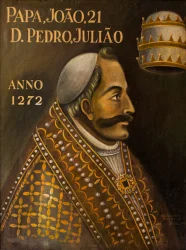
Boniface VI
Boniface VI was bishop of Rome for a brief period in 896, during a time of intense political struggle over the papacy. His election followed the death of Formosus, whose disputed career and alliances divided powerful factions in Italy. Boniface’s pontificate lasted only about two weeks, leaving little evidence of his policies or personal life.
Election in a Divided Rome
Boniface was a Roman cleric whose earlier career is poorly documented. He was elected in April 896 after Formosus died. The city was caught between competing political groups, including supporters of the late pope and factions aligned with the ruling houses of central Italy. The papacy was closely tied to the ambitions of local nobles and to the claims of rulers seeking imperial authority.
The succession was unstable from the outset. Boniface’s election was later declared invalid by a council held under Pope John IX in 898. That decision came amid broader efforts to address the legitimacy of recent papal elections and the treatment of Formosus.
A Very Short Pontificate
Boniface’s time as pope was too brief to leave a clear record of major reforms or decisions. Historical accounts report that he died after about fifteen days. Some say he died of gout; others suggest he was removed by the faction that supported his successor, Stephen VI. The surviving sources do not allow a firm conclusion.
The events that followed overshadowed his pontificate. Stephen VI presided over the notorious synod that put Formosus’s corpse on trial in 897, a dramatic posthumous condemnation tied to the same political conflict. The synod’s decisions were later reversed, and the question of Formosus’s status continued to divide the Roman church.
Legacy
Boniface VI is one of the least documented popes of the medieval period. His place in history is primarily as a short-lived successor caught in the struggle over Formosus and the shifting political factions of late ninth-century Rome. The uncertainty over whether he died naturally or was forced from office reflects how fragmentary and partisan the records of this period can be.