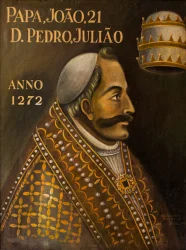
Julius I
Julius I was bishop of Rome from 337 to 352, a period when disputes over the Nicene understanding of Christ’s relationship to God the Father divided Christian communities across the Roman Empire. He became a prominent defender of Athanasius of Alexandria, whose opponents had driven him from his see. Julius’s response helped strengthen Rome’s role in controversies involving bishops beyond Italy.
A Church in Dispute
Julius was elected in February 337, soon after the death of Emperor Constantine. The empire was divided among Constantine’s sons, and theological disputes were closely tied to political rivalries. Many eastern bishops opposed Athanasius, a leading supporter of the Nicene Creed, and had condemned him at the Council of Tyre in 335. When Julius became bishop of Rome, Athanasius was in exile.
A rival group from Egypt asked Julius to recognize Pistus as bishop of Alexandria. Julius instead invited the parties to present their cases in Rome. Athanasius came to the city, and a Roman synod in 341 declared him and other deposed bishops innocent. Julius argued that the judgment deserved review and that Rome should have been consulted before a major bishop was removed. This was an early assertion of the Roman bishop’s authority in disputes beyond his own region.
The Council of Sardica
The conflict continued among the emperors and bishops of East and West. In 343, a council met at Sardica, in modern Bulgaria, to seek agreement. The eastern bishops withdrew and held a separate gathering, while the western bishops reaffirmed support for Athanasius. The council’s canons included a process by which a deposed bishop could appeal to the bishop of Rome for a retrial.
The divisions were not resolved during Julius’s lifetime. Nevertheless, his handling of the Athanasius case provided an influential precedent for Rome’s involvement in church disputes and helped the Nicene position maintain support in the West.
Leadership in Rome
Julius also oversaw the growth of the Roman Christian community and the development of its churches. Later traditions connect him with the construction or restoration of several basilicas, although surviving evidence for particular projects is limited. He led the church through a period when imperial favor and theological alignment shifted repeatedly.
Death and Legacy
Julius died on 12 April 352 and was later honored as a saint. His papacy is best remembered for the support he gave Athanasius and for the claims he made about Rome’s role in reviewing episcopal disputes. The arguments and precedents of the fourth century would continue to shape the evolving relationship between the churches of Rome and the East.