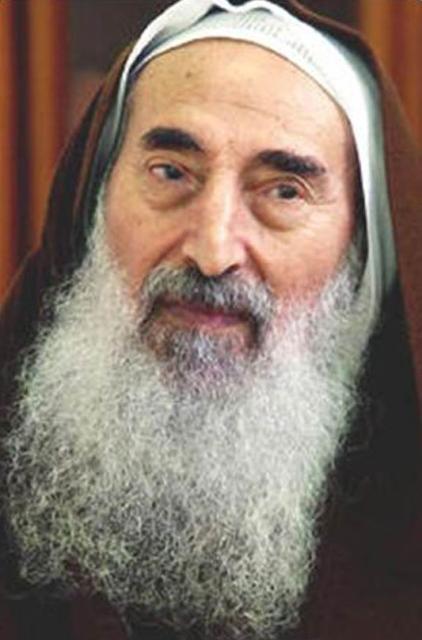
Ahmed Yassin
Ahmed Yassin (1937–2004) was a Palestinian cleric and a founder and spiritual leader of Hamas, an Islamist movement whose armed wing carried out attacks against Israeli military personnel and civilians. A refugee who became paralyzed as a teenager, Yassin built religious and social-service networks in Gaza before leading the movement’s turn toward armed struggle. He was killed in an Israeli airstrike in 2004.
Early life and teaching
Yassin was born in the village of al-Jura, near Ashkelon, in Mandate Palestine. After the 1948 war, his family was displaced to the Gaza Strip and settled in a refugee camp. In 1952, a spinal injury during a sports activity left him paralyzed. He later worked as a teacher of Arabic and Islamic studies and became a prominent preacher in Gaza.
From social services to Hamas
In 1973, Yassin helped establish al-Mujamma al-Islami, an Islamic social organization in Gaza that provided religious, educational and community services. The network expanded under his leadership and became the institutional base from which Hamas emerged.
As the First Intifada began in 1987, Yassin and other Muslim Brotherhood figures founded Hamas. The movement combined religious and political activism with an armed campaign against Israel. Yassin became its senior spiritual leader. Hamas’s armed wing carried out attacks that killed civilians as well as soldiers, a central part of Yassin’s political legacy and the conflict surrounding his leadership.
Imprisonment and return to Gaza
Israeli forces arrested Yassin in 1989. An Israeli military court sentenced him to life imprisonment plus 15 years for his role in the kidnapping and killing of Israeli soldiers and the killing of Palestinians accused of collaborating with Israel. He was released in 1997 in a prisoner exchange after Israeli agents were captured in Jordan following a failed attempt to assassinate Hamas leader Khaled Mashal.
After returning to Gaza, Yassin remained a prominent Hamas leader despite his severe disability and declining health. His influence extended beyond religious leadership to the movement’s political direction and public strategy.
Death and legacy
On March 22, 2004, an Israeli airstrike killed Yassin as he left morning prayers in Gaza City. His killing drew condemnation from Palestinian leaders and prompted calls for retaliation from Hamas. It also marked a major escalation in Israel’s campaign against the movement’s senior leadership.
Yassin remains a polarizing figure: some Palestinians regard him as a symbol of resistance and community leadership, while many Israelis remember him as a leader of a movement responsible for lethal attacks. His story reflects the entwined histories of displacement, religious organizing and armed conflict in Gaza.


