Alan Bullock
 Great Britain
- Biography of Alan Bullock
- Founding St. Catherine's College
- Hitler Biography
- Other Works and Political Influence
- Recognition and Honors
Biography of Alan Bullock
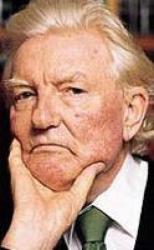
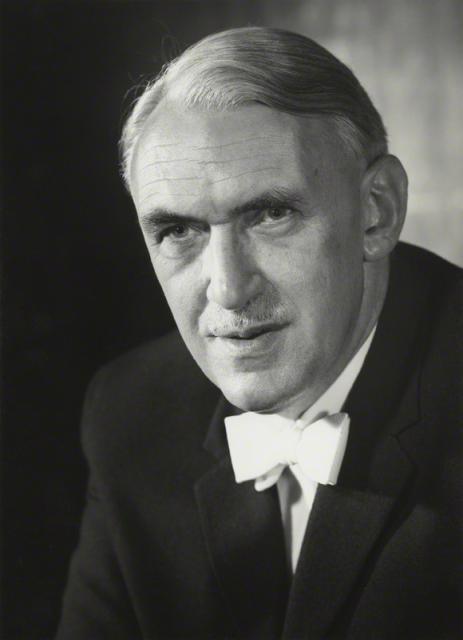
Alan Bullock was a British historian known for his intriguing biography of Adolf Hitler. He was born in Trowbridge, Wiltshire, England, to a father who worked as a gardener and a clergyman. Bullock studied at Wadham College, Oxford, specializing in modern history and ancient literature. After completing his college education, Bullock became an assistant to Winston Churchill, who was working on his "History of the English-Speaking Peoples" at the time. During World War II, Bullock worked for the BBC and later returned to Oxford after the war.
Founding St. Catherine's College
Bullock was the founder of St. Catherine's College, a college for students and graduates that was divided into faculties for science and various arts. Establishing a new college was not an easy task, but Bullock organized a significant fundraising campaign to make it happen. He later became the first full-time Warden of Oxford University.
Hitler Biography
In 1952, Bullock published "Hitler: A Study in Tyranny," which was the first detailed biography of Hitler based primarily on records from the Nuremberg Trials. In the book, Hitler was depicted as an adventurer completely devoid of principles, beliefs, and conscience. Many historians disputed Bullock's portrayal, arguing that while Hitler's principles may have been despicable, he did have them. However, supporters of both theories still exist today. Interestingly, Bullock's own opinion of Hitler changed over time, and in his subsequent books, he portrayed Hitler as an ideological fighter who carried out ideas expressed in "Mein Kampf" and other similar works, regardless of the potential consequences.
Other Works and Political Influence
Bullock's body of work extended beyond books on Hitler. In 1985, he published "The Humanist Tradition in the West." He is also remembered for his three-volume biography of British Foreign Secretary Ernest Bevin, titled "The Life and Times of Ernest Bevin." Bullock was the editor of "The Harper Dictionary of Modern Thought," an idea he proposed himself after realizing one day that he could not provide a clear definition of the term "hermeneutics."
For a long time, Bullock actively supported the Labour Party, and his political views greatly influenced his historical works. However, he later left the Labour Party to join the Social Democratic Party. In 1991, Bullock published "Hitler and Stalin: Parallel Lives," a significant work that drew complex parallels between the biographies of the two politicians. Bullock attempted to show that Hitler and Stalin began supporting each other at a certain point, but Stalin managed to consolidate his power in his own country, unlike Hitler who engaged in conquering wars and thereby weakened his position.
Recognition and Honors
In 1972, Bullock was knighted, and in 1976, he was granted a life peerage as Baron Bullock of Leafield in the County of Oxfordshire. In May 1976, he received an honorary degree from the Open University.