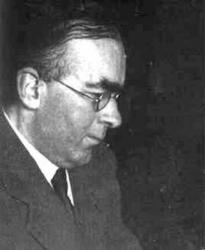
Alan Lightman
 USA
USA- Alan Lightman: A Notable Astrophysicist and Literary Virtuoso
- Academic and Literary Pursuits
- Scientific and Literary Convergence
- Acclaimed Novels and Nonfiction
- Bridging Disciplines at MIT
- Literary and Philanthropic Contributions
- A Legacy of Science and Literature
Alan Lightman: A Notable Astrophysicist and Literary Virtuoso
Early Life and EducationAlan Lightman, an American physicist, essayist, and writer, was born on November 28, 1948, in Memphis, Tennessee. The son of Richard Lightman, a movie theater owner, and Jeanne Garretson, a dance teacher, Lightman exhibited an early fascination with both science and the humanities. In 1970, he graduated from Princeton University with a Bachelor's degree in Physics. He later earned a PhD in Theoretical Physics from the California Institute of Technology in 1974.
Academic and Literary Pursuits
Lightman's academic career began with postdoctoral work in astrophysics at Cornell University from 1974 to 1976. During this time, he also embarked on his literary journey, publishing poems in small literary magazines. From 1976 to 1979, he held an assistant professorship at Harvard University. From 1979 to 1989, he was a staff member at the Harvard-Smithsonian Center for Astrophysics.
Scientific and Literary Convergence
In 1981, Lightman began publishing essays that explored the intersection of science and the humanities. His thought-provoking writings appeared in renowned publications such as Science 82, The New Yorker, Nature, and The New York Times. In the early 1990s, Lightman expanded his literary horizons, venturing into the realm of fiction.
Acclaimed Novels and Nonfiction
Lightman's debut novel, "Einstein's Dreams" (1993), became an international bestseller and was adapted into numerous theatrical productions. His subsequent novels, including "The Diagnosis" (2000) and "Reunion" (2003), received critical acclaim and literary recognition. Additionally, his научно-popular book, "Discoveries: Great Breakthroughs in 20th-Century Science," was lauded as one of the top ten science books of 2005 by Discover Magazine.
Bridging Disciplines at MIT
In 1989, Lightman was appointed as the Professor of the Practice of Science and Writing at the Massachusetts Institute of Technology (MIT), becoming the first faculty member to hold concurrent appointments in the sciences and humanities. From 1991 to 1997, he directed MIT's Program in Literature and Humanities, where he introduced innovative communication requirements that emphasized literary coursework for all science students. In 1995, he was honored with the John E. Burchard professorship of humanities. In 2001, Lightman co-founded MIT's Writing and Humanistic Studies program for undergraduates.
Literary and Philanthropic Contributions
Lightman served as a Pulitzer Prize juror in 1994 and 2004. In 1999, he established the Harpswell Foundation, a nonprofit organization dedicated to empowering underprivileged youth, particularly female leaders in developing countries, through housing and education.
A Legacy of Science and Literature
Alan Lightman's remarkable career encompasses both groundbreaking scientific research and critically acclaimed literary works. As a physicist, he has made significant contributions to our understanding of the cosmos. As a writer, he has illuminated the interplay between science and human experience, inspiring readers with stories that transcend disciplinary boundaries. Lightman's enduring legacy continues to inspire future generations to pursue excellence in both the sciences and the humanities.