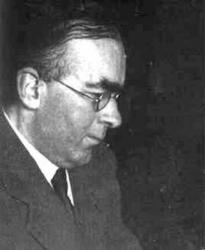
Hans Christian Oersted
 Denmark
- Biography of Hans Christian Ørsted
- Early Life and Education
- Scientific Career
- Discoveries and Contributions
- Recognition and Later Life
Biography of Hans Christian Ørsted
Hans Christian Ørsted was a Danish physicist and honorary foreign member of the St. Petersburg Academy of Sciences in 1830. He conducted research in the fields of electricity, acoustics, and molecular physics. Ørsted is best known for his discovery of the magnetic effect of an electric current in 1820.
Early Life and Education
Hans Christian Ørsted was born into a poor pharmacist's family. At the age of twelve, he was forced to work behind the counter at his father's pharmacy. However, Ørsted had a strong passion for learning and decided to pursue studies in various disciplines such as medicine, physics, astronomy, philosophy, and poetry at the University of Copenhagen. In 1797, he was awarded the university's gold medal for his essay titled "The Boundaries of Poetry and Prose." His subsequent works focused on the properties of alkalis, and his doctoral dissertation was dedicated to medicine. Ørsted embarked on internships in France, Germany, and the Netherlands to further his scientific knowledge.
Scientific Career
In 1806, Ørsted became a professor at the University of Copenhagen. In 1813, his work "Investigations of the Identity of Chemical and Electrical Forces" was published in France, where he first proposed the idea of a connection between electricity and magnetism. His reasoning was based on the observation that electricity produces light, sound, and heat. On February 15, 1820, Ørsted, already an esteemed chemistry professor, delivered a lecture to his students accompanied by demonstrations. During the lecture, a compass needle placed near a wire carrying an electric current would move when the circuit was closed and return to its original position when the circuit was opened. This experiment provided the first experimental confirmation of the link between electricity and magnetism.
Discoveries and Contributions
Ørsted's initial experiment resulted in only a slight deflection of the compass needle. In July 1820, he repeated the experiment using more powerful battery sources, which significantly increased the effect. He found that the force between a magnet and a wire carrying an electric current was directed perpendicular to the wire, rather than along the wire as initially believed. The magnetic needle never pointed directly at the wire but was always tangential to the circles formed around the wire. Ørsted concluded that magnetic force lines surround a conductor with an electric current, or in other words, an electric current creates a vortex of a magnetic field. This discovery became the foundation of the first fundamental law of electrodynamics.
Recognition and Later Life
Ørsted's memoir was published on July 21, 1820. A few days later, it reached Geneva, where François Arago, a prominent physicist, became acquainted with Ørsted's experiment. Arago presented Ørsted's findings at the Academy of Sciences in France on September 4, 1820. The recordings made by the Academy's protocolist showed that the members requested Arago to demonstrate Ørsted's experiment "in real size" at the next session. Ørsted received numerous honors and was elected a member of prestigious scientific societies. In 1821, he was one of the first to propose that light is an electromagnetic phenomenon. He also independently rediscovered the thermoelectric effect in 1822-1823 and constructed the first thermocouple. Ørsted conducted experimental studies on the compressibility and elasticity of liquids and gases, inventing the piezometer. He also conducted research in acoustics, attempting to discover the generation of electrical phenomena through air. In 1830, Ørsted became an honorary member of the St. Petersburg Academy of Sciences. He established a society in Denmark to promote scientific activities and a literary journal, delivered enlightening lectures to women, and supported Hans Christian Andersen, a future great writer. Ørsted became a national hero in Denmark.