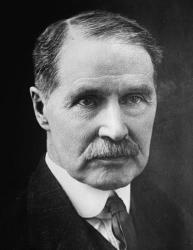
Alan Woods
 Great Britain
- Early Life and Activism
- Involvement in the Fight Against Franco
- Founding of the Committee for a Workers' International
- Split from the CWI
- Formation of the International Marxist Tendency
- Intellectual and Activist Work with the IMT
Early Life and Activism
Alan Woods was born into a working-class family with strong communist traditions. At the age of 16, he joined the Young Socialists organization, where he aligned himself with Ted Grant's "Militant" group within the Labour Party. Woods went on to study Russian at the University of Sussex, Sofia University in Bulgaria, and Moscow State University.
Involvement in the Fight Against Franco
In the early 1970s, Woods moved to Spain with his wife and two young daughters. He participated in the struggle against the dictatorship of Francisco Franco, immersing himself in the Spanish language and culture.
Founding of the Committee for a Workers' International
Woods played a key role in the formation of the Committee for a Workers' International (CWI) in 1974. This organization was established by supporters of the "Militant" tendency from various countries.
Split from the CWI
In the early 1990s, tensions emerged within the CWI over the continued work inside the Labour Party. A majority of the organization, led by Peter Taffe, believed it was necessary to begin building open mass organizations.
Formation of the International Marxist Tendency
Ted Grant and his supporters, including Alan Woods, opposed this approach and found themselves in a minority that was expelled from the CWI in 1992. Grant's supporters from various countries formed the Committee for a Marxist International in 1992, which later became known as the International Marxist Tendency (IMT) in 2006.
Intellectual and Activist Work with the IMT
In 1992, Grant and Woods founded the journal Socialist Appeal. Woods currently serves as a leading theorist for the IMT and edits the website In Defence of Marxism. He has engaged in political discussions with Hugo Chavez and argues that the Bolivarian Revolution is part of a worldwide revolutionary movement. He continues to travel and support other revolutionary processes, such as those in Pakistan, Bolivia, and Cuba.