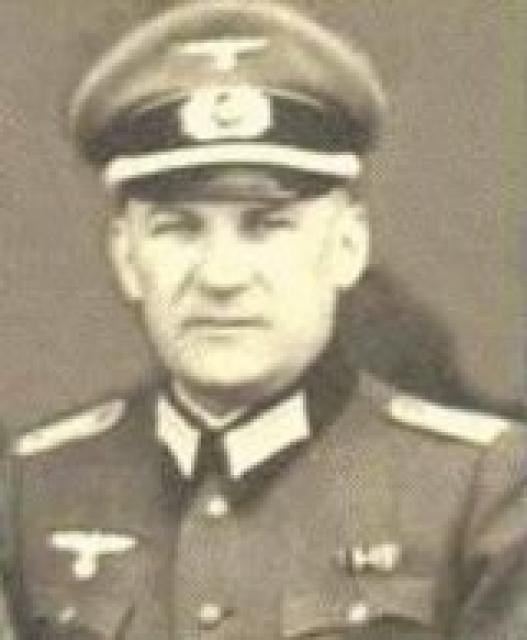
Albert Battel
 Germany
- Albert Battel: German Lawyer and Savior
- Early Life and Education
- Legal Career and Political Affiliation
- Military Service in Przemysl
- Confrontation with the SS
- Rescue of Ghetto Residents
- Aftermath and Investigation
- Confrontation with the SS
- Post-War Life and Recognition
Albert Battel: German Lawyer and Savior
Albert Battel, a German lawyer who served as a Wehrmacht officer during World War II, is renowned for his courageous actions in protecting Jewish residents of Przemysl from Nazi extermination.
Early Life and Education
Born into a Catholic family in Silesia, Albert Battel served as a soldier during World War I. After the war, he studied economics and law at the universities of Munich and Wrocław, earning a doctorate.
Legal Career and Political Affiliation
From 1925, Battel practiced as a notary and lawyer in Wrocław. In May 1933, he joined the Nazi Party, specifically its legal organization, the Bund Nationalsozialistischer Deutscher Juristen. However, he assisted his Jewish relative in fleeing to Switzerland the same year. In 1936, he faced disciplinary action after expressing sympathy for the plight of Jews.
Military Service in Przemysl
Despite his previous actions, Battel was sent to Przemysl in occupied Poland as the deputy military commandant in 1942. As Nazi Germany liquidated Polish Jewish ghettos, Battel realized the danger facing the Przemysl ghetto.
Confrontation with the SS
When SS units closed the Przemysl ghetto on July 15, 1942, Battel persuaded his superior, Major Max Liedtke, to protect Jewish workers in military industries. He placed 90 Jewish workers in the commandant's courtyard and blocked an SS transport column from entering the ghetto.
Rescue of Ghetto Residents
Battel personally intervened at the ghetto gate and ordered its opening. He transported around 100 more workers and their families in army trucks. The rescued Jews were housed in military barracks under the protection of the commandant's guards.
Aftermath and Investigation
The remaining Jews of the Przemysl ghetto were deported and murdered at the Belzec concentration camp. Battel justified his actions as necessary for wartime production, and he faced only disciplinary measures from the Wehrmacht. However, the SS initiated an investigation into his activities.
Confrontation with the SS
Heinrich Himmler, the head of the SS, ordered Battel's arrest after the war. Battel was unaware of the investigation and its details. In 1944, he was dismissed from service due to heart disease and returned to Wrocław.
Post-War Life and Recognition
After the war, Battel worked as a lawyer but was denied a license due to his past Nazi affiliation. He died of a heart attack in Frankfurt in 1952. The story of Battel's defiance against the SS was later documented by Israeli researcher Dr. Ziv Goshen. In 1981, Yad Vashem posthumously recognized Battel as a Righteous Gentile. His actions were featured in the BBC documentary "Auschwitz: The Nazis and the 'Final Solution.'"


