Albert Coons
 USA
USA- Biography of Albert Coons
- Early Career and Mentorship
- World War II and Scientific Contributions
- Legacy and Recognition
Biography of Albert Coons
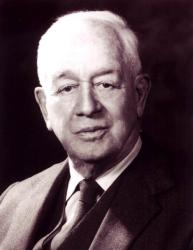
Introduction and Early LifeAlbert Hewett Coons was an American physician, pathologist, and immunologist. He revolutionized the study of antibodies and antigens by developing the concept of immunofluorescence, which involved labeling antibodies with fluorescent compounds for easier microscopic examination.
Coons was born in Gloversville, New York, to Albert Selmer and Marion Coons. His father was the head of a glove manufacturing company, and his grandfather, Eugene Coons, was a physician. He obtained his bachelor's degree from Williams College in Williamstown, Massachusetts, in 1933, and his master's degree from Harvard Medical School in 1937.
Early Career and Mentorship
Coons pursued his residency at the Boston Hospital in Massachusetts and later worked in the Thorndike Memorial Laboratory, where he focused on bacteriology and immunology. It was during this time that Coons became a protégé of Hans Zinsser, a renowned immunologist and microbiologist.
During a trip to Berlin, Germany, Coons discussed the immunological nature of Aschoff granules in rheumatism with his colleagues. This discussion led him to develop a model describing the antigens and antibodies involved in the formation of these granules. This model inspired the idea of labeling antibodies with fluorescent markers. Initially, Coons faced skepticism from his German colleagues, as the understanding of antibodies was limited at the time, and the techniques for binding antibodies with fluorescent molecules did not exist. However, Coons was determined to prove the validity of his theories and returned to Boston to bring his ideas to life.
World War II and Scientific Contributions
Coons temporarily put his scientific pursuits on hold during World War II when he was called to serve in the medical corps of the U.S. Army. He spent some time in the Pacific region, specifically in New Guinea, the Solomon Islands, and the Philippines. He left the army in late 1945 with the rank of major and two medals.
Upon his return to Boston, Coons resumed his research and collaborated with organic chemistry specialist Louis Fieser. Prior to the war, Coons and his colleagues had successfully linked anthracene isothiocyanate with antipneumococcal antibodies. This conjugate retained its immunological functions, including the ability to agglutinate pneumococcal bacteria. Furthermore, the resulting objects emitted bright fluorescence, making them highly visible under the microscope when exposed to ultraviolet light. Coons expanded this principle to a wide range of antigens and antibodies, opening up limitless possibilities for research.
Legacy and Recognition
Coons' laboratory not only developed a valuable practical technology but also produced a number of talented scientists who further advanced and expanded his work. Coons received numerous awards and honors for his contributions to the field of immunology. In September 1978, Albert Coons passed away in Brookline, Massachusetts, due to coronary insufficiency.