Francis Peyton Rous
 USA
USA- Biography of Francis Peyton Rous
- Early Career
- Discovery of Oncogenic Viruses
- Contributions to Medicine and Further Research
- Nobel Prize and Later Years
Biography of Francis Peyton Rous
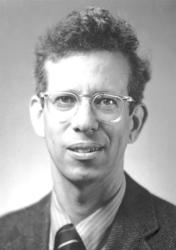
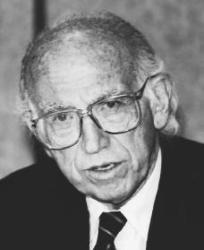
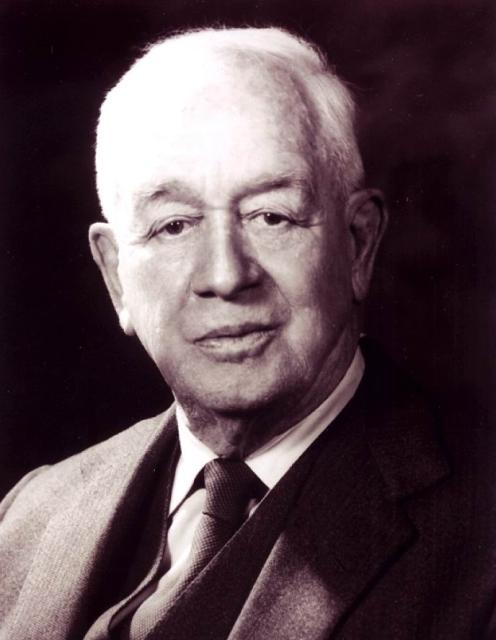
Francis Peyton Rous, an American pathologist and Nobel laureate in Physiology or Medicine in 1966, was born in the family of Charles Rous, a grain purchaser, and Francis Anderson Rous (Wood), the daughter of a judge from Texas. He was the eldest of three children and the only son. When Rous was 11 years old, his father passed away, leaving the family with modest means. Rous graduated from a free public school in Baltimore. His desire to attend college could only be fulfilled after he received a scholarship from Johns Hopkins University. In 1900, he earned a Bachelor's degree and enrolled in the medical school of the university.
Early Career
During his second year of medical school, Rous fell ill with tuberculosis. He traveled to Texas for treatment, where his uncle found him a job on a ranch near Cuana, north of Abilene, on the Oklahoma border. Despite not being athletically inclined, Rous enjoyed working as a cowboy. By the time he returned to Johns Hopkins University, he had come to understand the truth that an uneducated person could be as noble and attractive as those with extensive education. In 1905, Rous received his medical degree and began his internship at Johns Hopkins University. However, practicing medicine did not satisfy him, and he accepted an offer to become an assistant in pathology at the University of Michigan. In 1907, he spent a year in Dresden, Germany, studying pathological anatomy. Upon his return to the United States, he was given the opportunity to work under the guidance of Simon Flexner at the Rockefeller Institute for Medical Research (now Rockefeller University). His first work there involved studying lymphocytes, cells specialized in producing antibodies against viruses and other foreign agents. Rous quickly advanced in his career at the Rockefeller Institute, becoming a full-time faculty member in 1920.
Discovery of Oncogenic Viruses
In 1909, a farmer showed Rous a Plymouth Rock chicken with a tumor in the chest area. Rous performed a biopsy of the tumor, examined the tissue under a microscope, and identified the tumor as spindle cell sarcoma, a malignant tumor composed of connective tissue and spindle-shaped cells. Rous ground up the tumor tissue, obtained cell-free extracts in a saline solution, and injected them into other chickens of the same breed. One of the chickens developed sarcoma as well. Rous went on to transmit the tumor to chickens of several generations using similar methods. Two years later, in an article published in the Journal of Experimental Medicine, he wrote, "The neoplasms were genuine tumors, and therefore their transmission by cell-free filtrates is of the utmost significance."
The transmission of tumors to chickens through cell-free extracts, in which tumor tissue was ground up and the cells removed by filtration, suggested that the cause of these tumors was a virus. However, this fact was not entirely new, as a few years earlier, two Danish scientists had achieved the transmission of avian leukemia using cell-free filtrates. But since leukemia was not considered a form of cancer at the time, this finding did not attract much attention. Additionally, the theories of the German pathological-anatomical school led by Rudolf Virchow, who opposed the theory of the infectious origin of cancer advocated by Robert Koch, dominated the understanding of the causes and development of cancer. As a result, Rous's hypothesis that experimental sarcoma in chickens was caused by a virus did not receive any significant response for two decades. Only many years later did this tumor come to be known as Rous sarcoma, and the hypothetical factor leading to its development was named the Rous sarcoma virus. It wasn't until the 1930s that Rous's hypothesis was confirmed, and in the 1940s, the Rous sarcoma virus was identified through electron microscopy.
During the first two years of his work at the Rockefeller Institute, Rous and his colleagues discovered two more experimental tumors in birds caused by cell-free filtrates. In 1914, Rous proposed that all three experimental tumors belong to a "new group of diseases causing various tumors in chickens." He and his colleagues also attempted to identify the conditions that promoted or inhibited the growth of these experimental tumors and sought to find similarities and differences between these tumors and "natural" neoplasms in mammals.
Contributions to Medicine and Further Research
The outbreak of World War I led Rous and his colleague J. Turner to work on developing methods for blood storage. They soon created a solution called ACD (acid, citrate, dextrose), in which red blood cells could be preserved for three to four weeks, making the blood suitable for transfusion throughout that time. The ACD solution is still used for this purpose today. From 1918 to 1926, Rous served as a member of the National Research Council, working as the Vice President of the Medical Division and the Executive Committee. Shortly after the end of World War I, he and his colleagues developed a new method of cell separation using trypsin, an enzyme produced by the pancreas that hydrolyzes proteins.
In the early 1920s, Rous studied the physiological functions of the liver and gallbladder. He and his team discovered that even with the obstruction of two-thirds of the bile ducts, there was no significant delay in the excretion of bile pigments. They also demonstrated that bile is reabsorbed in the intestines and returned to the liver through a specialized system of vessels. They further revealed that the gallbladder absorbed water and concentrated bile, which became the physiological basis for clinical tests for the presence of gallstones. Additionally, they found that bilirubin, a pigment in bile, is formed by the breakdown of hemoglobin, and an accumulation of bilirubin in the blood leads to jaundice. In the early 1930s, Rous and his team resumed their experimental research on cancer, studying the malignant transformation of papillomas (benign tumors) in rabbits and tumors in rats and mice. They discovered that the growth and transformation of these tumors were associated with the interaction between an oncogenic agent (in their experiments, coal tar) and certain environmental factors.
Nobel Prize and Later Years
In 1942, Rous proposed three hypotheses regarding the mechanisms of tumor formation. According to the first hypothesis, viruses can infect the body during prenatal development or at a young age and, as Rous stated, "in most cases, do not manifest at all. However, if virus-infected cells are exposed to a provoking factor, the process of cell transformation and tumor growth can begin." The second hypothesis suggested that tumors that appear to form spontaneously can be caused by chemical carcinogenic substances (which Rous referred to as provoking carcinogens). Finally, the third hypothesis proposed that "dormant" viruses and chemical carcinogens can interact, also leading to the seemingly spontaneous appearance of tumors. In 1966, Rous was awarded the Nobel Prize in Physiology or Medicine "for his discovery of oncogenic viruses." He shared this prize with Charles Huggins. In his Nobel lecture titled "The Challenge to Man of the Neoplastic Cell," Rous discussed the unique difficulties faced by cancer researchers. Despite some progress in the field, he stated that "all the successes achieved so far are episodic."
In 1915, Rous married Marion Ekford DeKrey, and they had three daughters together. After the end of World War II, the couple purchased a house in West Cornwall, Connecticut, where Rous spent his summers fishing and gardening. Renato Dulbecco once described Rous as "a man completely devoted to his work, a scientist with broad perspectives, strong, kind, and with a good sense of humor." Three years after receiving the Nobel Prize, Rous was diagnosed with stomach cancer, and he passed away on February 16, 1970, in New York.
Rous received numerous awards throughout his career, including the Walker Prize from the Royal College of Surgeons in London (1941), the Jessie Stevenson Kovalenko Medal from the National Academy of Sciences (1954), the Lasker Award from the American Public Health Association (1958), the National Medal for Distinguished Contributions to Science from the National Science Foundation (1966), and the Cleveland Medal from the American Association for Cancer Research (1966).
Rous was a member of the Danish Royal Academy of Sciences, the American Association for the Advancement of Science, the Weizmann Institute in Israel, the National Academy of Sciences of the United States, the American Medical Association, the American Society of Experimental Pathology, the American Philosophical Society, and the American Association for Cancer Research.