Georg Kohler
 Germany
- Biography of Georg Köhler
- Childhood and Education
- Research Career
- Contribution and Impact
- Later Life and Legacy
Biography of Georg Köhler
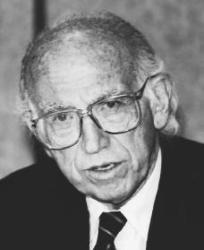
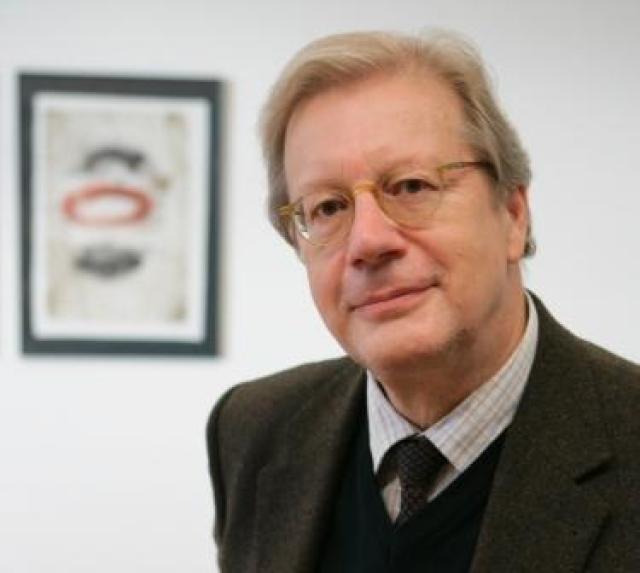
Georg Köhler was a German biologist and immunologist, born on April 17, 1946, in Munich, Germany. He was awarded the Nobel Prize in Physiology or Medicine in 1984 for his groundbreaking work in the field of monoclonal antibodies.
Childhood and Education
Köhler's mother was French, while his father was German. He spent his childhood in Kehl, a town located on the border between France and Germany, where he received his secondary education. In 1965, he enrolled at the University of Freiburg to study biology and obtained his diploma in 1971 for his research on the repair of deoxyribonucleic acid (DNA) in Escherichia coli, a bacterium commonly found in the intestine. However, by the time he received his diploma, Köhler's interest had shifted from microbiology to immunology.
Research Career
In pursuit of his passion for immunology, Köhler approached researcher Fritz Melchers from the Basel Institute for Immunology to become his doctoral advisor. Melchers agreed, and in 1971, Köhler began his immunological research on the enzyme beta-galactosidase. At that time, the Immunological Institute, established in 1969, was headed by Niels Jerne. Köhler's doctoral dissertation aimed to solve the problem of understanding how the immune system generates such a wide variety of specific antibodies.
Köhler's research focused on studying the different antibodies produced to fight against a single antigen. He used the bacterial enzyme beta-galactosidase as the antigen in his experiments. Despite facing difficulties in maintaining cell viability, Köhler was able to demonstrate that at least 1,000 antibodies were produced by mice targeting the same region of the beta-galactosidase molecule. This discovery indicated that all these diverse antibodies recognized a single antigenic determinant group.
To test the prevailing theory explaining the diversity of antibodies, Köhler decided to investigate populations of identical antibody-producing cells (clones) and determine the frequency of mutations. He also aimed to understand the influence of mutations on the types of antibodies produced by these cells.
In 1974, Köhler received a long-term subsidy from the European Molecular Biology Organization (EMBO) and began working under the guidance of Cesar Milstein at the Laboratory of Molecular Biology of the Medical Research Council at the University of Cambridge. In the spring of 1974, Köhler commenced his research.
During his time at Milstein's laboratory, Köhler worked on the fusion of different myeloma cells to produce hybridomas. These hybrid cells combined the useful properties of both parent cells and continuously produced antibodies against known antigens. Köhler also developed a method to isolate these hybridomas as clones, which resulted in the production of identical monoclonal antibodies.
Contribution and Impact
Köhler and Milstein's development of the hybridoma technique revolutionized the use of antibodies in healthcare and research. Monoclonal antibodies, with their highly specific binding to certain substances, could be mass-produced. These antibodies have been instrumental in the treatment of leukemia, infectious diseases like hepatitis B and streptococcal infections, and the detection of cases of acquired immunodeficiency syndrome (AIDS). They have also found applications in tissue typing, allergy treatment, and the study of various biological phenomena.
For their pioneering work on the production of monoclonal antibodies through hybridomas, Köhler and Milstein were awarded one-half of the Nobel Prize in Physiology or Medicine in 1984. The other half of the prize was awarded to Niels Jerne.
Later Life and Legacy
After his groundbreaking research, Köhler continued his scientific career. From 1985 onward, he worked as the Director of the Max Planck Institute for Immunobiology in Freiburg.
Köhler and his wife Claudia have three children. He is known for his beard and his casual attire. Apart from his scientific pursuits, Köhler has a keen interest in architecture and enjoys restoring old houses. Colleagues describe him as calm, modest, and thoughtful.
Köhler is a member of the European Molecular Biology Organization and has received numerous awards and honors, including the international award from the Gairdner Foundation in 1981. His contributions to immunology and the development of monoclonal antibodies have had a lasting impact on the field of medical research.