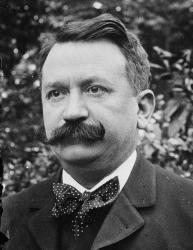
Albert Lebrun
 France
- Albert Lebrun: A Statesman in Turbulent Times
- Presidency and Challenges
- Limited Presidential Powers
- World War II and Aftermath
- Arrest and Retirement
- Post-War Years
Albert Lebrun: A Statesman in Turbulent Times
Early Life and Political CareerAlbert Lebrun, born on March 29, 1871, in Mercy-le-Haut, France, embarked on a distinguished political career that spanned three decades. As a mining engineer, he entered politics in 1900 as a deputy for the Republican Left, becoming the youngest deputy in France at the age of 29. He subsequently served as Minister of Colonies.
Presidency and Challenges
In 1932, Lebrun was elected President of France, following in the footsteps of Gaston Doumergue and Paul Doumer. His presidency was marked by a tumultuous period, both domestically and internationally. The rise of Nazism in Germany and the increasing influence of left-wing parties in France created a volatile political climate. Governments under Lebrun, including the national unity government led by former President Doumergue, pursued a policy of appeasement towards Germany, but failed to effectively address the growing threats.
Limited Presidential Powers
Under the constitution of the Third Republic, the president had limited executive authority. As such, Lebrun had little control over the conduct of foreign and domestic policy. Prime ministers and their governments bore the primary responsibility for these areas. Nonetheless, Lebrun was able to maintain a degree of political stability through his authority and respect among politicians of various persuasions. He was re-elected to a second seven-year term in 1939, becoming only the second president in the Third Republic to do so.
World War II and Aftermath
With the outbreak of World War II on September 1, 1939, Lebrun's presidency entered a new phase. In June 1940, France was defeated by Nazi Germany. The National Assembly, convened in Vichy, surrendered power to Marshal Philippe Pétain, effectively ending the Third Republic and establishing the collaborationist Vichy regime.
Arrest and Retirement
Lebrun refused to acknowledge his deposition or resign. However, he made no attempt to restore his authority in French colonies or establish a government-in-exile. Instead, he chose to remain in France, settling in Vizeille. In 1943, he was arrested by the Germans and held under house arrest in Tyrol. Due to declining health, he was later allowed to return to Vizeille but remained under surveillance.
Post-War Years
After the liberation of France in 1944, Lebrun, whose second presidential term nominally expired in 1946, met with General Charles de Gaulle and recognized him as the provisional head of state and his legitimate successor. Lebrun retired to Paris, where he lived until his death on March 6, 1950.