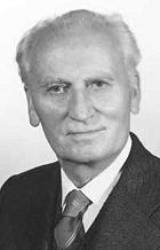
Aleksander Bogomolets
 Ukraine
- Alexander Bogomolets: A Pioneer in Pathophysiology and Public Health
- Early Life and Education
- Academic Career
- Presidency of the Academy of Sciences of Ukraine
- Contributions to Medicine
- Anti-Aging Research
- Public Service
- Recognition and Legacy
Alexander Bogomolets: A Pioneer in Pathophysiology and Public Health
Alexander Bogomolets, a renowned Soviet pathologist, public figure, and academician, left an indelible mark on the scientific and medical landscapes of his time.

Early Life and Education
Alexander Alexandrovich Bogomolets was born on May 12 (24), 1881, in Odessa, Ukraine. In 1906, he graduated from Novorossiysk University in Odessa with a degree in medicine.

Academic Career
Bogomolets began his academic career as a professor at Saratov University from 1911 to 1925. In 1925, he moved to the 2nd Moscow University, where he served as a professor on the medical faculty and director of the Institute of Hematology and Blood Transfusion from 1928 to 1931.

Presidency of the Academy of Sciences of Ukraine
In 1930, Bogomolets was appointed the President of the Academy of Sciences of the Ukrainian SSR (ASSR), a position he held until 1946. Concurrently, he served as the director of the Institute of Experimental Biology and Pathology and the Institute of Clinical Physiology of the ASSR, which now bear his name.
Contributions to Medicine
Bogomolets made significant contributions to various fields of medicine, including pathophysiology, endocrinology, the vegetative nervous system, constitutional medicine, oncology, and the physiology and pathology of connective tissue. He developed the concept of colloidal-clasts shock, which explained the mechanism of action of blood transfusions. He also pioneered the use of antireticular cytotoxic serum to treat connective tissue disorders.
Anti-Aging Research
Bogomolets played a pivotal role in the field of longevity research. He studied the relationship between the connective tissue and aging, proposing that age-related decline was due to changes in this tissue. His work laid the foundation for further research into the mechanisms of aging.
Public Service
Beyond his scientific contributions, Bogomolets was deeply involved in public service. He served as a member of the Central Executive Committee of the ASSR and the USSR from 1931 onwards. He was elected as a deputy to the Supreme Soviet of the USSR in its first and second convocations.
Recognition and Legacy
Bogomolets's contributions were widely recognized. He received numerous awards, including the Hero of Socialist Labor, the Order of Lenin, and the State Prize of the USSR. He was also elected to various honorary positions in academic institutions across the Soviet Union. Bogomolets's legacy lives on through the institutions and research programs that bear his name, continuing his pioneering work in medicine.