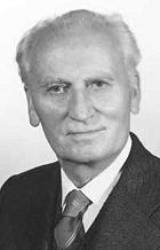
Jack Kevorkian
 USA
USA- Biography of Jack Kevorkian (Dr. Death)
- Advocacy for Euthanasia
- Legal Troubles
- Legacy and Cultural References
Biography of Jack Kevorkian (Dr. Death)
Jack Kevorkian, also known as Dr. Jack, Dr. Death, and Dr. Suicide, was an American physician and advocate for euthanasia. He was born on May 26, 1928, in Pontiac, Michigan, to Armenian immigrants. Kevorkian graduated from the University of Michigan Medical School in 1952, and later served in the U.S. armed forces during the Korean War. He worked at the G. Ford Hospital in Detroit and subsequently became a pathologist in various hospitals in California and Michigan.
Advocacy for Euthanasia
While practicing medicine, Kevorkian became a vocal advocate for euthanasia in cases where patients were beyond medical help and their suffering outweighed the desire to continue living. In 1989, he developed and constructed a device known as the "Mercitron" (derived from the word mercy), which delivered a lethal dose of analgesics and toxic drugs into the patient's bloodstream. This device was intended for patients who were unable to end their own lives through other means.
On June 4, 1990, Kevorkian assisted in the death of his first patient, who was suffering from Alzheimer's disease. From 1990 to 1998, more than 130 individuals utilized the Mercitron to end their lives. Kevorkian's ideas were strongly condemned by the medical community and the U.S. authorities.
Legal Troubles
In 1991, Kevorkian's medical license was revoked due to his advocacy for euthanasia. He subsequently faced four trials but was acquitted each time due to insufficient witness testimony. In March 1999, Kevorkian was charged with second-degree murder after performing euthanasia on a 52-year-old man suffering from Lou Gehrig's disease. The prosecution presented a video recording of the act, which Kevorkian had made and made publicly available. He was sentenced to 10 to 25 years in a Michigan state correctional facility.
On June 1, 2007, Kevorkian was released on parole two years earlier than his original sentence, subject to several restrictions. He was prohibited from assisting anyone in euthanasia, providing care for individuals over the age of 62, and having close contact with individuals with congenital disabilities.
Legacy and Cultural References
Jack Kevorkian's controversial actions and beliefs have made him a prominent figure in various forms of media. He is referenced in the computer game "Blood" as a cheat code that leads to the hero's suicide. Kevorkian is also mentioned in Woody Allen's film "Hollywood Ending" and in an episode of the animated series "South Park."
Additionally, Kevorkian's portrayal in the sketch comedy show "In Living Color" was played by Jim Carrey. Al Pacino portrayed him in Barry Levinson's film "You Don't Know Jack: The Life and Death of Jack Kevorkian." He is also mentioned in the book "Death's Chronicles: Encyclopedia of Death" and in Kurt Vonnegut's essay "God Bless You, Dr. Kevorkian."
Kevorkian's name has been used in the essay "The Principle of Dilbert" by American writer Scott Adams and in an article by Patrick J. Buchanan titled "Death of the West: How Dying Populations and Immigrant Invasions Threaten Our Country and Civilization." Furthermore, there is a music group called "Kevorkian Death Cycle" and references to him in Eminem's song "3 Verses" and King Crimson's song "Coda - I Have A Dream."