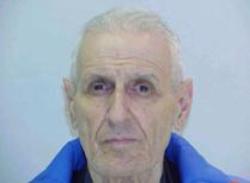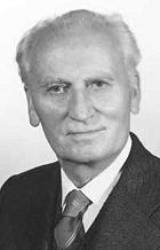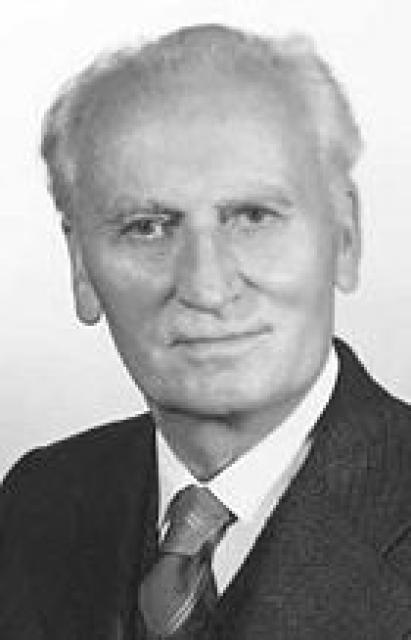
Frantishek Shubik
 Slovakia
- Biography of František Šubík
- Involvement in Slovak National Party
- Literary Pursuits
- Involvement in Katyn Commission
- Post-War Consequences
Biography of František Šubík
František Šubík was a professor of pathological anatomy and a well-known figure in the field of medicine. He served as a professor of pathological anatomy at the Faculty of Medicine of the J. A. Komenský University in Bratislava. During World War II, he was part of the "international expert commission" consisting of experts from twelve occupied or German-dependent countries, as well as from Switzerland.
Involvement in Slovak National Party
Before the war, Šubík joined the Slovak National Party called Hlinka's Slovak People's Party, named after its first chairman Andrej Hlinka. The party had a strong nationalist orientation and played a major role in the creation of the autonomous government led by Jozef Tiso in 1938. Šubík became the chairman of the party's Social Commission. From August 1940, he was also a member of the State Council of the First Slovak Republic. In 1942, he took on the role of head of healthcare in Slovakia.
Literary Pursuits
In addition to his medical career, Šubík was also a poet. He wrote poetry under the pseudonym Andrej Žarnov. His debut collection, "Guardian of Morava," was published in 1925. However, it received criticism from some for being "nationalistic anti-Czech poetry." The collection was confiscated, and its revised edition in 1940 was used for anti-Czech propaganda. During the early years of the war, Šubík published four collections of his poems, which aligned with the Christian-national ideology of A. Hlinka. In 1926, Šubík accompanied Hlinka on a trip to the United States as a representative of the Slovak Catholic Student Center. He was also involved in translations, primarily of Polish poetry, showcasing his love for Polish culture. However, after the annexation of parts of Slovakia by Poland in November 1938, Šubík publicly expressed his emotional rejection of Poland through a poem. The poem was seen as a catalyst for anti-Polish sentiments in Slovakia.
Involvement in Katyn Commission
In 1943, Šubík was asked by the German embassy to appoint a delegate from Slovakia to the Katyn Commission. He suggested Professor G. Krška, but his nomination was rejected due to his Czech nationality. Another candidate, Professor Ladziansky, fell ill at the last moment. Eventually, the Minister of Internal Affairs, Alexander Mach, recommended that Šubík himself go to Katyn, despite his expertise being in pathology, not forensic medicine. Following his return from the trip, Šubík made several public speeches but soon limited his activities due to accusations of supporting German propaganda. When the Soviet Katyn Commission's report was published in early 1945, he chose not to make any public statements, despite German authorities urging him to do so.
Post-War Consequences
With the approaching frontlines, Šubík fled to Kremsmünster in Austria and Altötting in Bavaria on May 31, 1945. However, at the request of the Czechoslovak government, he was extradited to Prague by American authorities on July 2, 1945, and was imprisoned in Bratislava until July 16, 1945. In November 1945, a criminal case was opened against Prof. Šubík, accusing him not only of his involvement in the Katyn episode but also of his actions as the head of the healthcare department at the Ministry of Internal Affairs, where Jewish doctors were prohibited from practicing medicine. However, the Medical Board came to Šubík's defense, testifying that he had aided many non-Aryan doctors. As a result, he received a moderate punishment and served his sentence in Leopoldov Prison.
After his release, Šubík worked as a general practitioner in Trnava since he was deprived of his professorship. He lived under police surveillance, was prohibited from publishing, and his poems were removed from textbooks. With the help of his Austrian friends, he left the country on December 30, 1952. He lived in Drösing, Vienna, and Germany for a period of time. In 1953, he immigrated to the United States, where he worked as a doctor. There is no information about him providing any testimonies or involvement in the Katyn case during his time in exile.