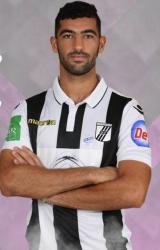
Alesha Asanovich
 Croatia
Biography of Alesha Asanovich
Alesha Asanovich is a former Yugoslavian and Croatian footballer and midfielder, currently serving as an assistant coach for Moscow's Lokomotiv. Along with the new head coach of Lokomotiv, his assistants also arrived in Moscow. One of them, a former midfielder for the Croatian national team, known for his performances in Euro-96 and the 1998 World Cup, is as well-known as Slaven Bilic. According to Bilic, on the second day in Russia, Asanovich confessed to the rest of the coaching staff that he felt like he had been with Lokomotiv for a year already. Where did this feeling come from? - "We came to a big club - it's evident in everything. We want to work and fully devote ourselves to the process. So, we don't even notice the time passing. Now the main thing is to focus on the start of the championship. The fans and the club management should not regret inviting us." How does the work of the coaching staff in the Croatian national team differ from that in Lokomotiv? - "First and foremost, the conditions. If with the national team, players were in our control only a few times a year, now we have more time for work. We work tirelessly, even 24 hours a day. But in the national team, we tried to adhere to the same work schedule. We didn't have the opportunity to try out all our ideas in practice, but we never stopped thinking about what needs to be done and what can be undertaken, we went to watch how players performed for their clubs, and we were engaged in many other things. So, the difference for us now is only in the number of matches and training sessions. The intensity is the same." How does a day in the life of an assistant coach like Bilic unfold? - "We start work early in the morning: usually, we gather at 9 am to finalize the plan for the day. Then we conduct training. Another staff meeting takes place after lunch. And in the evening, it's time to watch and discuss video materials." You have been working with Bilic for a long time. Have you been living like this all this time? - "Yes. With time, some nuances have changed, but they are insignificant. What's important is that our vision of football hasn't changed during all this time. We know what we want to achieve from the players and how to do it." Speaking of coaches, the concept of philosophy is often mentioned. Should assistant coaches fully share the head coach's vision of football? - "Not necessarily. The more opinions and perspectives, the better - it increases the chances of choosing the most effective concept. Bilic is good as a head coach because he can listen to other people's opinions and adapt them for the common good." Can you give an example of a disagreement in views? - "Well, for example, it could be about the intensity of a particular training session. Slaven may think that now is the time to give the players an easy break, while I, on the contrary, believe that serious training is necessary. Together, we weigh all the pros and cons and find the best solution for the team. Such democracy in the coaching staff is common for Croatian clubs?" - "It depends not on traditions but on specific individuals. I know that Bilic trusts me one hundred percent. We played together in the national team and have been working together for a long time, so we have thoroughly studied each other." Can you recall how your partnership was formed? - "In 2004, we came to the Croatian Football Federation to start working with the youth national team. We flipped a coin at the federation's doorstep - who would be the head coach and who would be the assistant? After all, at that time, we had similar backgrounds: we finished our playing careers around the same time, started coaching. Our names were also equally known to the general public." The head coach of the Croatian national team at the 1998 World Cup, Miroslav Blazevic, calls your coaching staff one of the most talented in Europe. What is the talent of an assistant coach? - "In my opinion, it's not about the individual talents of any of us. It's just that by coaching standards, we are all young but have accumulated a certain level of experience. We manage to avoid serious disputes and conflicts. Also, thanks to the fact that we were good players ourselves, we can establish a connection with the players. We learn quickly and are open to new knowledge, ready to be involved in football 24 hours a day. We have a modern understanding of football. The goal of achieving results through game development is entirely achievable." As far as I know, you are the one who often acts as the "scout" for Bilic. Did you come to Moscow in the spring to assess the situation in Lokomotiv in advance? - "No. We were fully focused on preparing for the European Championship, and it was simply impossible to find time for a trip. But I have been to Russia several times, and even before that, I was in the Soviet Union." How do you feel about the idea of learning Russian? Bilic promised that all of you would go and learn it. - "I think it's necessary. Communication with other members of the coaching staff, players, club employees, and fans is crucial for effective work. And what about the language of football? Don't you have problems communicating now? - "There are no major problems indeed. There are enough players in the team who speak English. But if we know Russian, we can work more productively." It seems that you are satisfied with your position as an assistant. Do you have ambitions to become a head coach? - "Yes, of course. I have no doubt that sooner or later, I will try to work independently. But it's too early to talk about it now. I am in the coaching staff of Lokomotiv and fully focused on bringing maximum benefit in my current position."