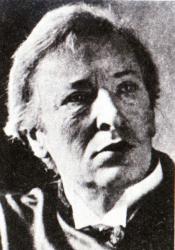
Alexander Agricola
 Belgium
- Alexander Agricola: A Renowned Franco-Flemish Composer
- Early Life and Influences
- Florence and Beyond
- Renowned Composer
- Musical Style
- Legacy and Death
Alexander Agricola: A Renowned Franco-Flemish Composer
Alexander Agricola was a significant figure in the musical landscape of the Habsburg era. As a member of the illustrious "Grande Chapelle," he played a pivotal role in this prestigious musical ensemble.
Early Life and Influences
Little is known about Agricola's early years, but research suggests he was born in Ghent. He spent much of his life in Italy, France, and the Low Countries, though the specific details of his whereabouts remain fragmented.
In Milan, Agricola served as a court singer from 1471-1474. There, he witnessed the transformation of the choir into one of Europe's leading musical collectives, alongside composers like Loyset Compère and Johannes Martini.
Florence and Beyond
In 1474, Agricola received a recommendation to Lorenzo de' Medici in Florence. By 1476, he worked in Cambrai, likely as a singer. His subsequent activities until 1491 are unclear, though he may have been associated with the French royal chapel.
Renowned Composer
Agricola's reputation as a composer soared in the 1490s, leading to a fierce competition between France and Naples for his services. In 1500, he joined the court of Philip the Handsome, Duke of Burgundy and King of Castile, accompanying him on imperial tours. By this time, his fame had spread throughout Europe.
Musical Style
Agricola's work initially reflected the influence of Johannes Ockeghem, but later he drew inspiration from Josquin des Prez. His compositions featured strong counterpoint and use of repetition and sequence, popular techniques at the turn of the century.
Agricola composed masses, motets, and other sacred music, as well as instrumental works based on sacred themes. His melodies were complex, ornate, and highly refined.
Legacy and Death
Agricola played a crucial role in bridging the gap between the Burgundian style and the emerging Netherlandish style. His music seamlessly blended elements from both and introduced his own unique flair.
In August 1506, while visiting Valladolid, Spain, Agricola contracted the plague. He passed away on August 15, 1506.