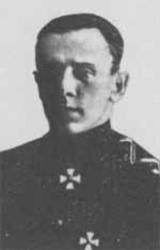
Alexander Alekseev
- Alexander Alekseevich Alekseev
- World War II
- Heroic Exploits
- Post-War Career
- Awards and Honors
- - Hero of the Soviet Union (March 24, 1945)
Alexander Alekseevich Alekseev
Early Life and Military CareerAlexander Alekseevich Alekseev, a Soviet artillery officer, was born in Moscow on June 12, 1923. He completed his secondary education in 1941 and joined the Red Army in June of the same year. In April 1942, he graduated from the Moscow Artillery School, which had been evacuated to Miass in the Chelyabinsk region due to the war.
World War II
Alekseev served throughout the Great Patriotic War. From May 1942 to May 1943, he commanded a platoon in the 255th Guards Mortar Battalion of the 41st Guards Mortar Regiment. He then served as a group commander in the 6th Reserve Artillery Regiment from May to October 1943. During this time, he fought on the Karelian Front and participated in the defense of the Arctic.
From October to December 1943, Alekseev was the reconnaissance chief of the 375th Guards Mortar Battalion of the 90th Guards Mortar Regiment on the 2nd Baltic Front. He was wounded in December and spent the next two months in a hospital.
After recovering, Alekseev returned to active duty in March 1944 as reconnaissance chief and battery commander in the 26th Guards Mortar Regiment. He fought on the 1st and 2nd Baltic Fronts, as well as the Leningrad Front. He participated in several major operations, including the Vitebsk-Orsha, Polotsk, Šiauliai, Riga, and Memel offensives.
Heroic Exploits
Alekseev became known for his bravery during the Belorussian Operation in June and July 1944. On June 25, he crossed the Western Dvina River on an improvised raft and infiltrated enemy territory. He detected two artillery batteries and relayed their coordinates to his division, which subsequently eliminated them. This action allowed Soviet forces to cross the river and establish a bridgehead.
On July 9, Alekseev played a crucial role in repelling an enemy counterattack near the village of Vidzy. He led a reconnaissance team, discovered a large concentration of German tanks and infantry, and called in artillery fire that disrupted the attack.
Later in the war, on July 30, Alekseev adjusted artillery fire under heavy machine gun fire on the outskirts of Jelgava. His actions suppressed enemy artillery, allowing Soviet tank units to capture the western part of the city.
Post-War Career
Alekseev remained in service after the war, participating in the Soviet-Japanese War in 1945 as a battery commander. In 1946, he began studying economics at Moscow State University, graduating in 1950. He also worked for the Ministry of Housing and Civil Construction of the Russian SFSR.
Alekseev later served in various planning and construction roles within the Soviet military and the Ministry of Medium Machine Building. He retired from active duty as a colonel in April 1969 but continued to work in the Ministry of Medium Machine Building.
Awards and Honors
Alexander Alekseevich Alekseev received numerous awards and honors for his service and bravery. These include:
- Hero of the Soviet Union (March 24, 1945)
- Order of Lenin (March 24, 1945)- Order of the Red Banner (August 15, 1944)
- Order of the Patriotic War, 1st class (March 11, 1985)
- Order of the Red Banner of Labour (March 10, 1981)
- Medal "For Battle Merit" (December 30, 1956)
- Medal "For Labour Valour" (September 11, 1956)
Alekseev passed away on September 22, 1989, and was buried in Vagankovo Cemetery in Moscow. He remains a respected and honored figure in Russian military history.