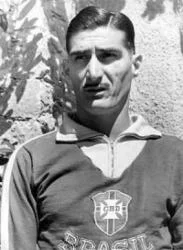
Alexander Evtushok
 Ukraine
Born in Dzhankoi, Crimea, on January 11, 1970, Alexander Evtushok grew up in the football culture of the peninsula and began his career with Simferopol’s Tavriya. A central defender, he built his reputation in Ukrainian club football through steady performances for Naftovyk Okhtyrka, Yavir Krasnopillia, Karpaty Lviv and Dnipro. His next move took him far beyond the familiar grounds of the Ukrainian league.
A breakthrough with Karpaty
Evtushok became a prominent figure at Karpaty in the early 1990s. He scored the winning goal in the club’s 1–0 victory over Shelbourne in the 1993 UEFA Cup Winners’ Cup, giving the Lviv side its first win in European competition. His performances there earned him a place in Ukraine’s national team. He made his senior debut in September 1994 and went on to collect eight caps between 1994 and 1998, including appearances in the qualifying campaign for Euro 1996.
After helping Dnipro win a bronze medal in the 1995–96 Ukrainian championship, Evtushok attracted the attention of Coventry City manager Gordon Strachan. In 1997, he became the first player with a Ukrainian passport to appear in the English Premier League. The move was a landmark for Ukrainian football, though his time in England was brief. Evtushok made three league appearances for Coventry before injuries and the difficulty of settling into a new league interrupted his progress.
A career shaped by resilience
He returned to Karpaty and later played for Kyiv’s CSKA, finishing his professional career in 2001. His years in football crossed a period of upheaval: the end of the Soviet system, the emergence of Ukraine’s independent leagues and the first opportunities for Ukrainian players to test themselves in western Europe. He was never a long-term Premier League regular, but his move to Coventry opened a door that other Ukrainian internationals would later walk through.
Evtushok’s path was built less on one extended spell abroad than on the way he adapted to different teams and levels of competition. From Crimea to Lviv, Dnipro and Coventry, he remained a defender trusted in high-pressure matches and a familiar name to followers of early Ukrainian football. His short English chapter became the detail most often attached to his career, but the years he spent establishing himself at home—and his eight appearances for the national side—tell the fuller story of a player who helped Ukrainian football take its first steps onto a wider stage.